
Double Helix
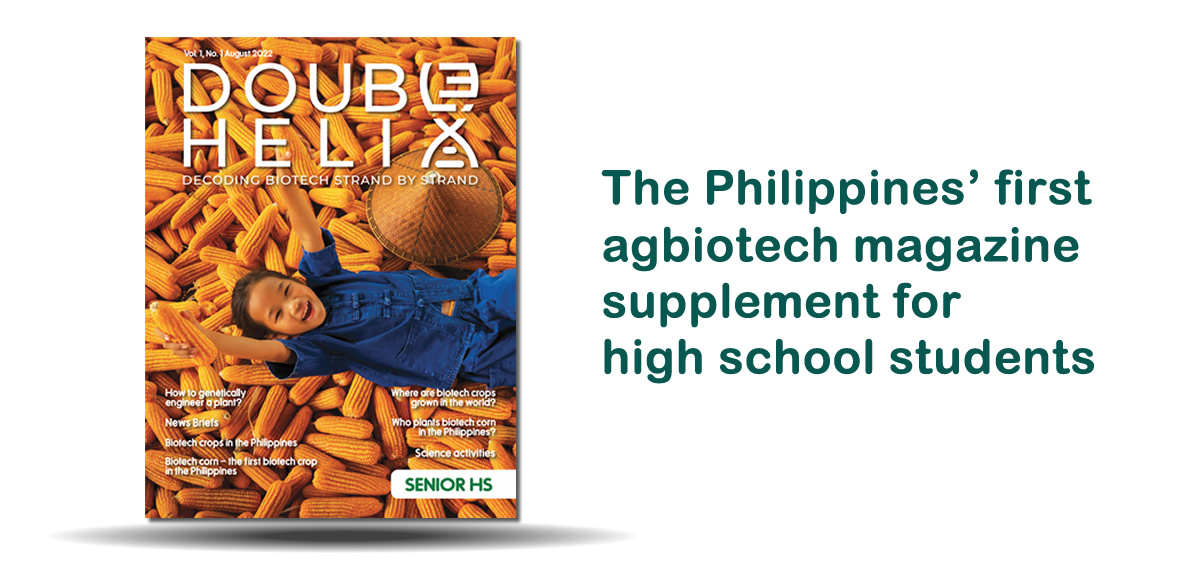
ISAAA Inc., as part of the Know The Science: Strengthening Biotech Links project with the Philippine Department of Agriculture Biotechnology Program Office, launches Double Helix, the first and only magazine supplement on agricultural biotechnology (agbiotech) for senior high school students taking the Science, Technology, Engineering, and Mathematics (STEM) strand in the country.
Double Helix was developed for senior high school students to help introduce them to agbiotech. The eight-page magazine is filled with illustrated stories, infographics, and activities to engage the young mind.
- Volume 1 - No. 1 : The maiden issue of the Double Helix presents the process of developing a biotech crop, the countries where biotech crops are grown, biotech crops in the Philippines, Filipino biotech corn farmers, news briefs, and some cool and fun science activities and exercises for senior high school students and their teachers to enjoy.
- Volume 2 - No. 1 : The magazine explains how gene editing works and presents two gene editing tools — CRISPR and TALENs. This issue also includes the current gene editing R&D initiatives in the country that are being conducted in various institutions.
- Volume 3 - No. 1 : The magazine presents livestock innovations in the Philippine pipeline, GM-improved and gene-edited animals that are approved for commercial release and already sold in the market.
- Volume 3 - No. 2 : The world faces major challenges as climate change affects agriculture and threatens farming while decreasing global crop productivity. Climate change is already affecting the planet in numerous ways, including rising global temperatures, melting ice caps and glaciers, extreme weather events, ocean acidification, and disruption of ecosystems.
- Volume 4 - No. 1 : New products of biotechnology for consumers were featured in the magazine, including the bioengineered pothos, golden lettuce, QCAV-4 banana, and the Yelloway One banana. The magazine also contains an article about cultivated chicken and products of molecular farming, such as real cow milk proteins (casein) made from potatoes, soybeans with pork proteins, pea with beef proteins, and meaty corn.
- Volume 5 - No. 1 : This eight-page magazine features biotech products developed for environmental applications and is filled with illustrated stories, news briefs, and science learning activities to enhance students' scientific literacy.