

ERS Reports Continued Increase in Farmer Adoption of Genetically Engineered Crops
September 30, 2026| |
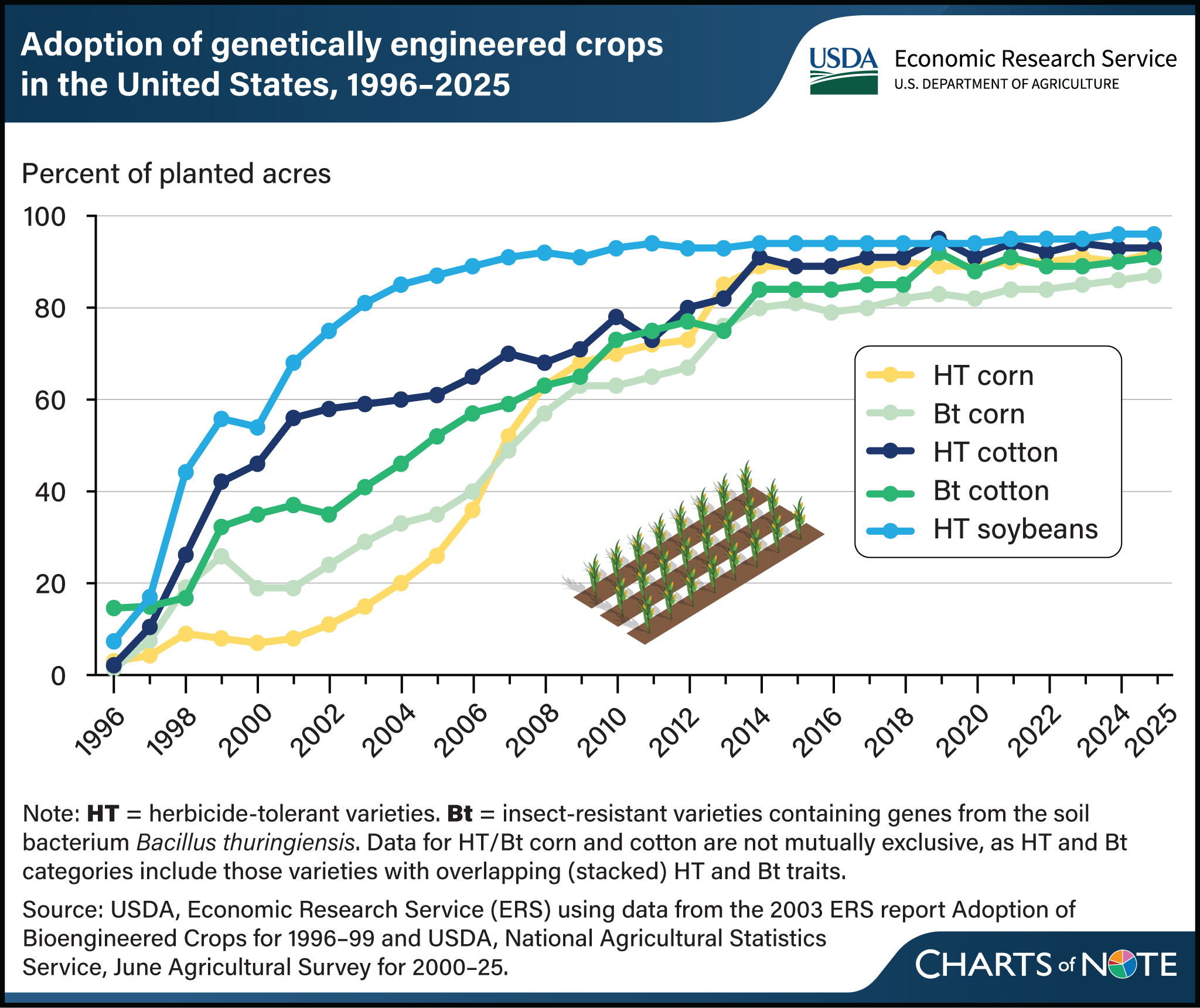
Farmer adoption of genetically engineered (GE) crops in the US continued to rise in 2025, according to the US Department of Agriculture (USDA) Economic Research Service (ERS) agricultural survey.
GE seeds were first introduced to American farmers in 1996, and their adoption grew rapidly across the country. Most modified crops are engineered with two key traits: tolerance to weedkillers and built-in protection against insect pests, the latter often using a natural soil bacterium known as Bacillus thuringiensis. While seeds were initially developed with just one of these features, farmers now increasingly plant stacked seeds that offer both weed and pest protection in a single plant. According to USDA data, GE varieties accounted for over half of all corn, cotton, and soybean acreage in the US by 2008, a figure that has climbed to more than 90 percent today.
Although scientists have created crops designed to withstand drought, viruses, and fungi, or to provide boosted levels of protein, healthy oils, and vitamins, weed control and pest resistance remain the most widely used features in US agriculture. GE crops are also used to grow alfalfa, canola, and sugar beets, but corn, cotton, and soybeans make up the vast majority of all GE farmland in the US.
Read more from USDA ERS.
| |
You might also like:
- Farmers Speak: Stories from the Fields
- Study Finds Scientific Evidence, Benefits Can Dispel Public’s Doubt Towards GMOs
- Brief 57: Global Status of Commercialized Biotech/GM Crops: 2024
Biotech Updates is a weekly newsletter of ISAAA, a not-for-profit organization. It is distributed for free to over 22,000 subscribers worldwide to inform them about the key developments in biosciences, especially in biotechnology. Your support will help us in our mission to feed the world with knowledge. You can help by donating as little as $10.
-
See more articles:
-
Plant
- CRISPR-Cas9 Editing Opens New Paths for Forage Improvement
- Study Identifies Genes That Control Dwarf Apple Growth
- Scientists Fine-tune Rice Texture Using Prime Editing
- Researchers Identify Wild Papaya Genes to Boost Plant Drought Resilience
- USDA Seeks Public Comments on Two Genetically Engineered Cotton Varieties
- Scientists Crack Pumpkin Genome, Unlocking Genetic Blueprint for Better Crops
- Smallholders in the Global Arena: The Socio-Economic Impact of GM Adoption in Indonesia and Beyond
- ERS Reports Continued Increase in Farmer Adoption of Genetically Engineered Crops
-
Read the latest: - Biotech Updates (September 30, 2026)
- Gene Editing Supplement (September 30, 2026)
- Gene Drive Supplement (February 22, 2023)
-
Subscribe to BU: - Share
- Tweet