

Scientists Fine-tune Rice Texture Using Prime Editing
September 30, 2026| |
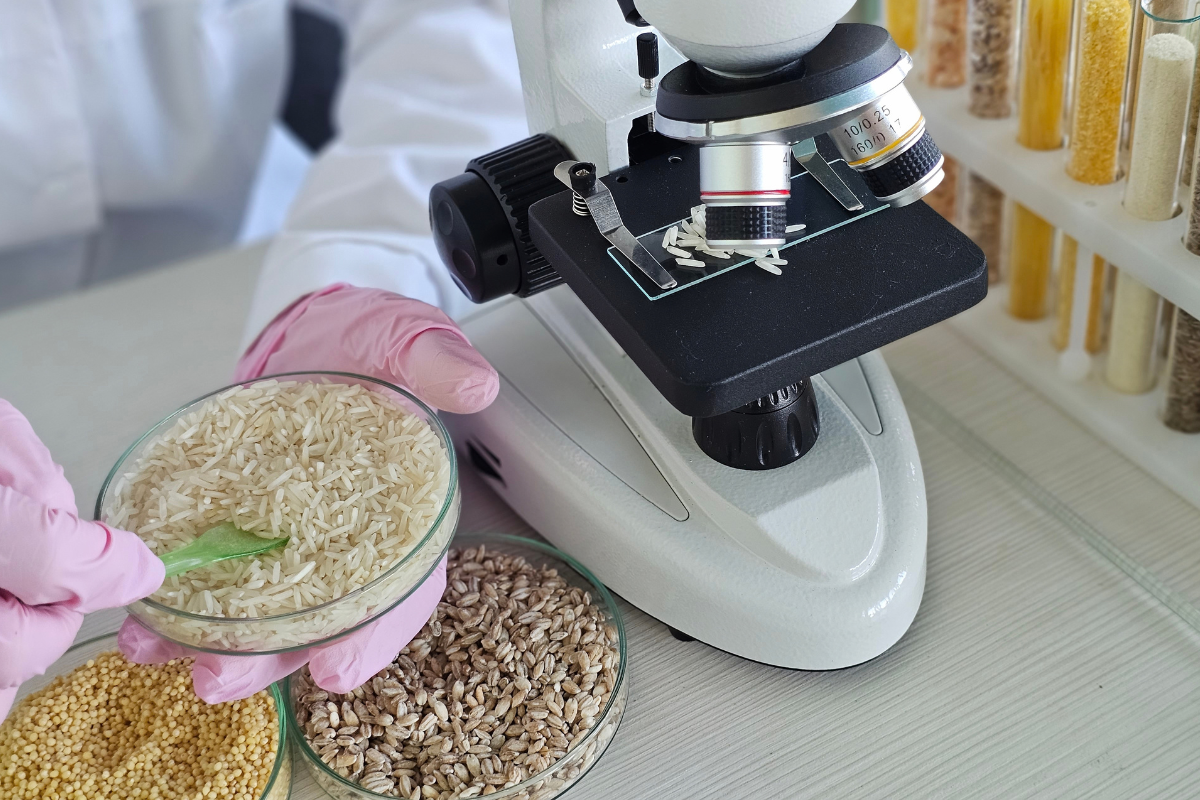
Scientists from China leveraged prime editing to develop rice with lower amylose content that could improve texture and cooking quality. The promoter of the Wx (Waxy) gene controls the production of a starch component that affects how rice cooks and feels when eaten. By making targeted changes to the promoter of the Wx (Waxy) gene, the researchers produced two new rice lines with amylose reductions of up to 3.95 percentage points without disrupting existing agronomic characteristics.
Rather than completely knocking out the gene, which can produce excessively sticky glutinous rice, the regulatory region of the Wx gene was precisely modified using prime editing to reduce its expression. In laboratory tests, the resulting rice lines showed longer gel consistency, higher breakdown viscosity, and improved instrumental taste values, characteristics associated with softer texture and improved eating quality after cooking.
Field evaluations found no significant differences in the agronomic traits evaluated between the edited rice and the original variety, while neither of the two edited promoter sequences was found among the 3,032 rice accessions examined. Human sensory evaluation and further field testing will be needed. Nevertheless, this approach demonstrates how prime editing can create new versions of existing genes that are not readily found in natural rice populations, giving breeders more options for fine-tuning cooking and eating quality.
Read the full study in the International Journal of Molecular Sciences to learn more.
| |
Biotech Updates is a weekly newsletter of ISAAA, a not-for-profit organization. It is distributed for free to over 22,000 subscribers worldwide to inform them about the key developments in biosciences, especially in biotechnology. Your support will help us in our mission to feed the world with knowledge. You can help by donating as little as $10.
-
See more articles:
-
Plant
- CRISPR-Cas9 Editing Opens New Paths for Forage Improvement
- Study Identifies Genes That Control Dwarf Apple Growth
- Scientists Fine-tune Rice Texture Using Prime Editing
- Researchers Identify Wild Papaya Genes to Boost Plant Drought Resilience
- USDA Seeks Public Comments on Two Genetically Engineered Cotton Varieties
- Scientists Crack Pumpkin Genome, Unlocking Genetic Blueprint for Better Crops
- Smallholders in the Global Arena: The Socio-Economic Impact of GM Adoption in Indonesia and Beyond
- ERS Reports Continued Increase in Farmer Adoption of Genetically Engineered Crops
-
Read the latest: - Biotech Updates (September 30, 2026)
- Gene Editing Supplement (September 30, 2026)
- Gene Drive Supplement (February 22, 2023)
-
Subscribe to BU: - Share
- Tweet