

Korean Rice Cultivar Gains Glufosinate Resistance Through Prime Editing
September 30, 2026| |
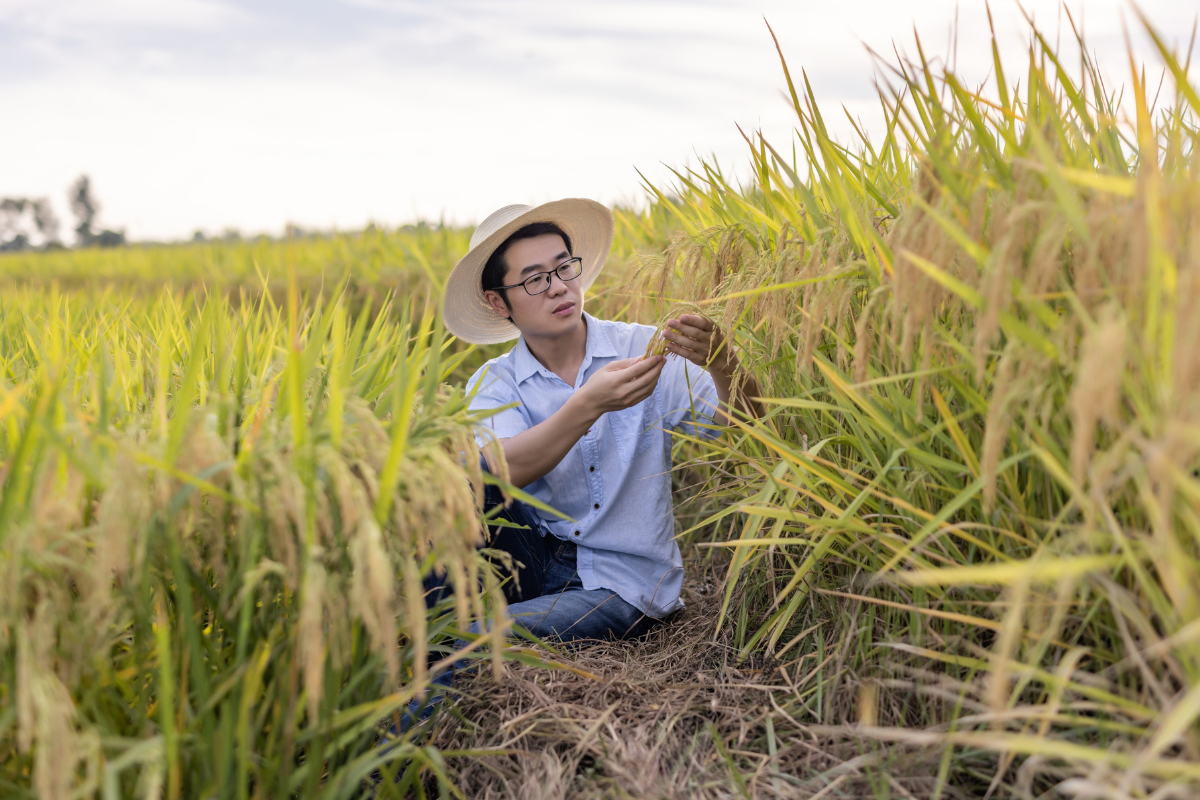
Scientists in South Korea have used prime editing to introduce herbicide tolerance into "Dongjin," a popular native rice cultivar. By precisely modifying the OsGS1;1 gene without retaining foreign transgenes, the researchers demonstrated a new genetic strategy to tackle major weed-control challenges in direct-seeded rice. The framework reveals significant insights into how high-precision gene editing can streamline weed management and highlights its potential for precise, transgene-free crop breeding.
Weed control is a major challenge in direct-seeded rice, where aggressive "weedy rice" emerges alongside crops and cannot be easily eliminated without negatively affecting the harvest. To solve this, researchers introduced a targeted 6-base-pair insertion into the OsGS1;1 gene with a 61% precise editing rate, successfully conferring resistance to glufosinate. When exposed to the herbicide, edited seedlings maintained robust shoot and root growth, whereas standard wild-type plants were severely stunted. Notably, the final crop line was confirmed to be free of foreign transgenes, offering a clean genetic resource designed for smoother regulatory approval and broader adoption.
While the edited rice has so far been evaluated only at the seedling stage, this strategy could provide farmers with a safe, effective tool against persistent weeds in direct-seeded production. By continuing to refine these precise editing mechanisms, scientists could potentially tailor elite crop varieties to withstand emerging field challenges for sustainable agricultural systems.
Read the full study in the Korean Journal of Breeding Science to learn more.
| |
Biotech Updates is a weekly newsletter of ISAAA, a not-for-profit organization. It is distributed for free to over 22,000 subscribers worldwide to inform them about the key developments in biosciences, especially in biotechnology. Your support will help us in our mission to feed the world with knowledge. You can help by donating as little as $10.
-
See more articles:
-
Plant
- CRISPR-Cas9 Editing Opens New Paths for Forage Improvement
- Study Identifies Genes That Control Dwarf Apple Growth
- Scientists Fine-tune Rice Texture Using Prime Editing
- Researchers Identify Wild Papaya Genes to Boost Plant Drought Resilience
- USDA Seeks Public Comments on Two Genetically Engineered Cotton Varieties
- Scientists Crack Pumpkin Genome, Unlocking Genetic Blueprint for Better Crops
- Smallholders in the Global Arena: The Socio-Economic Impact of GM Adoption in Indonesia and Beyond
- ERS Reports Continued Increase in Farmer Adoption of Genetically Engineered Crops
-
Read the latest: - Biotech Updates (September 30, 2026)
- Gene Editing Supplement (September 30, 2026)
- Gene Drive Supplement (February 22, 2023)
-
Subscribe to BU: - Share
- Tweet