

Indian Scientists Develop First AI-designed Genome Editing Tools for Crop Improvement
May 27, 2026| |
Genome editing has emerged as one of the most transformative biotechnological tools for modern agriculture, which enable precise crop improvement with unprecedented speed and accuracy. However, all currently available plant genome editing systems are derived from naturally occurring bacterial or archaeal proteins. In addition, the two most widely used genome editing platforms, Cas9 and Cas12, are protected by complex intellectual property frameworks, limiting their global accessibility and commercial deployment in some regions.
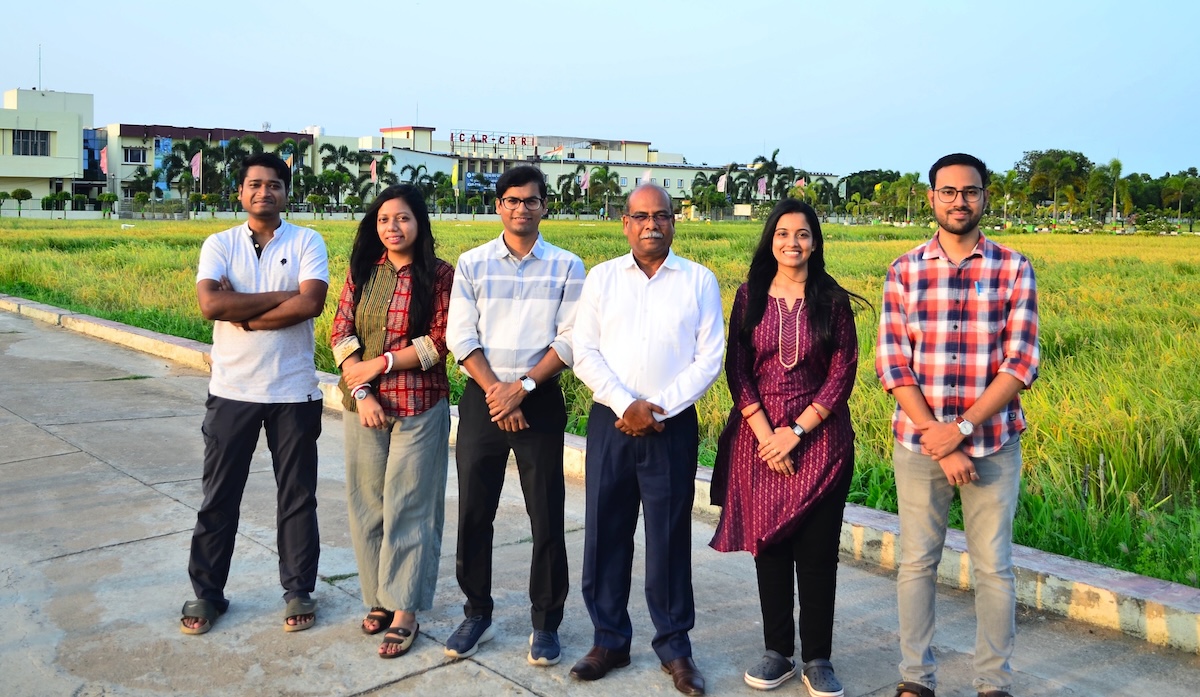
In a recent study published in New Phytologist, researchers from the ICAR-Central Rice Research Institute developed and experimentally validated Plant OpenCRISPR-1 (POC1), an artificial intelligence-designed genome editing nuclease tailored for plant systems. Built upon the OpenCRISPR-1 platform, POC1 represents one of the first AI-designed genome editing systems for crop improvement and commercial applications.
Alongside gene disruption, POC1 can efficiently induce precise point mutations through base editing and prime editing approaches. The researchers demonstrated that POC1-mediated knockout, adenine base editing, cytosine base editing, and prime editing exhibit efficiencies comparable to those of the conventional SpCas9 system while recognizing the same NGG PAM sequence. Stable transformation and validation in regenerated rice plants further confirmed its practical applicability in crops. The study highlights how AI-designed proteins could transform agricultural biotechnology, particularly for the Global South, by potentially improving the accessibility and affordability of genome editing technologies through reduced intellectual property constraints, without compromising editing efficiency.
Read more findings in the New Phytologist.
| |
You might also like:
- AI-Powered Robots to Transform Crop Breeding
- AI Tool MorphPod Automates Plant Fruit Measuring to Breed Better Crops
- AgBiotech Startup Brings Plant Immunity Back to Life with AI-Driven Gene Editing
Biotech Updates is a weekly newsletter of ISAAA, a not-for-profit organization. It is distributed for free to over 22,000 subscribers worldwide to inform them about the key developments in biosciences, especially in biotechnology. Your support will help us in our mission to feed the world with knowledge. You can help by donating as little as $10.
-
See more articles:
-
Plant
- Indian Scientists Develop First AI-designed Genome Editing Tools for Crop Improvement
- Study Reveals Limited GMO Knowledge Among Jordanian Adults
- Ukraine to Harmonize GMO Regulations with EU by August 2026
- Pakistan Introduces Major Biosafety Reforms to GMO Regulation
-
Animal
- Gene Editing Improves Alkaline Tolerance in Grass Carp
-
Food
- FAO Report Calls for Urgent Coordinated Financing to Address Agrifood Challenges in Africa
- Scientists Uncover Genetic Secret Behind Stevia's Sweetness
- CRISPR Reduces Allergy Risk in Cultivated Beef Cells
-
Read the latest: - Biotech Updates (October 7, 2026)
- Gene Editing Supplement (September 30, 2026)
- Gene Drive Supplement (February 22, 2023)
-
Subscribe to BU: - Share
- Tweet