

Scientists Find Transcription Factor MdWRKY9 Boosts Apple's Salt Tolerance
December 10, 2025| |
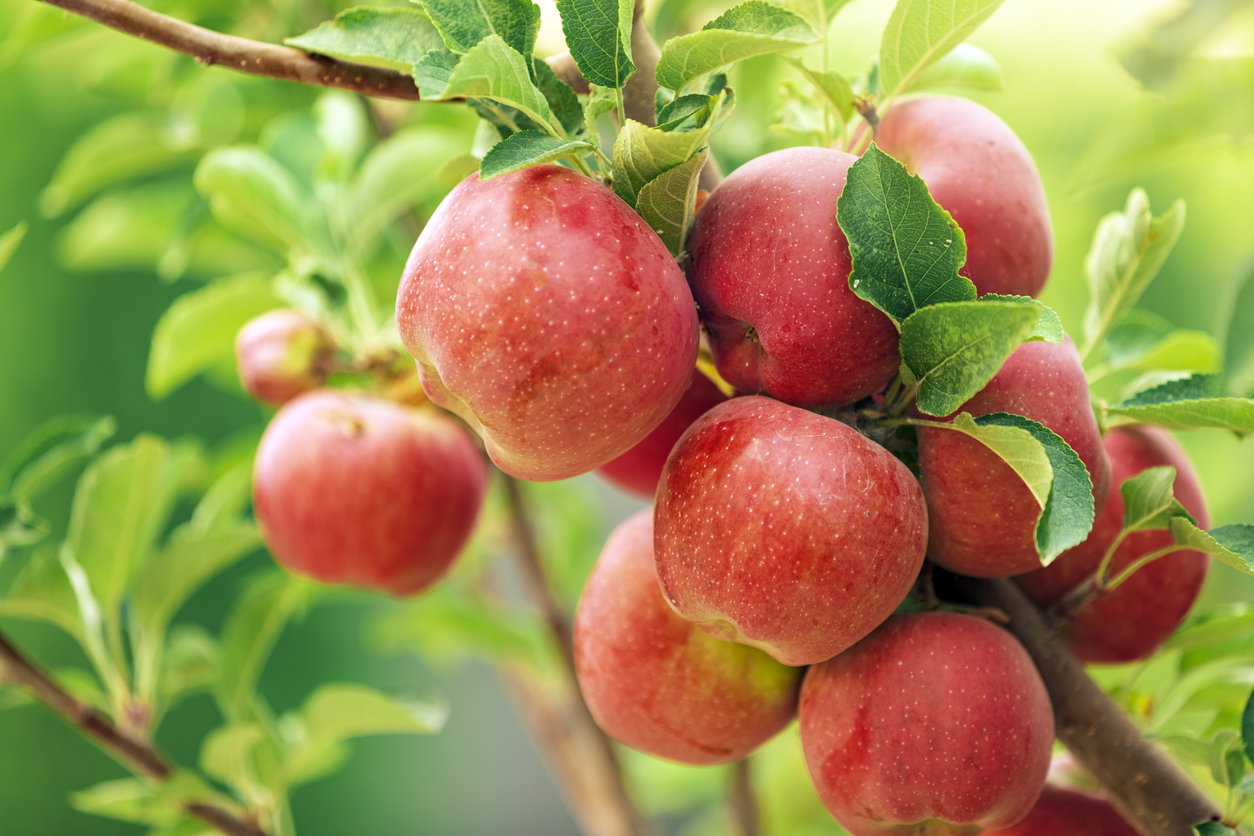
Salt stress poses a significant threat to global agricultural productivity, impacting over 6% of the world's land and challenging crop cultivation. Apple trees are vulnerable to high salt concentrations, which hinder their growth and degrade fruit quality. To address this challenge, researchers looked at the hormonal and genetic pathways that govern how apples respond to saline environments.
A new study published in Horticulture Research by researchers from Shandong Agricultural University has identified that the transcription factor MdWRKY9 is a key player in boosting apple's resilience. The study reveals that MdWRKY9 interacts with the jasmonic acid (JA) signaling pathway, a plant hormone known to enhance salt tolerance, to regulate genes essential for ion homeostasis. Under salt stress, the expression of MdWRKY9 significantly increases in apple roots. Experiments with transgenic apples overexpressing this factor showed markedly enhanced salt tolerance, with improved growth maintained even in high-salt conditions.
The mechanism involves MdWRKY9 directly binding to the promoters of genes crucial for ionic balance, specifically MdNHX1 and MdSOS2, thereby boosting their expression. Furthermore, the JA signaling pathway modulates this process by triggering the degradation of JAZ proteins, which normally repress the pathway. This degradation frees MdWRKY9 to activate its target genes, thereby maintaining cellular ion homeostasis, which is necessary for survival during salt stress. These findings provide a significant molecular understanding, paving the way for the development of genetically modified apple varieties—and potentially other crops—with enhanced salt tolerance to secure global food production in increasingly saline-prone agricultural regions.
For more details, read this article or download the open-access paper in Horticulture Research.
| |
You might also like:
- Researchers Identify Genetic Secrets of High-Yield Fuji Apple
- Scientists Use CRISPR to Enhance Aroma Quality of Apple
- CRISPR Apple Exhibits Less Phloridzin and Normal Growth
Biotech Updates is a weekly newsletter of ISAAA, a not-for-profit organization. It is distributed for free to over 22,000 subscribers worldwide to inform them about the key developments in biosciences, especially in biotechnology. Your support will help us in our mission to feed the world with knowledge. Support ISAAA by subscribing as a Premium or Elite Subscriber
-
See more articles:
-
Plant
- Study Reveals Key Gene Interaction to Strengthen Grapevine’s Resistance Against Powdery Mildew
- Regulatory Authorities and Breeding Sector Call for a Food Safety Culture in Gene Editing
- EU Reaches Landmark Deal on New Genomic Techniques to Boost Agri-Food Sector
- Scientists Enhance Dominant-Negative Effect of the Gl2 Mutation for Gossypol-free Cottonseeds
- Researchers Use CRISPR to Develop Rice Plants with High Salt Resistance
- EFSA GMO Panel Releases Scientific Opinion on the Assessment of GM Maize MON 87460 for Renewal Authorization
-
Food
- Gene Editing Unlocks Commercial Potential of Goldenberry
- Scientists Find Transcription Factor MdWRKY9 Boosts Apple's Salt Tolerance
-
Read the latest: - Biotech Updates (October 14, 2026)
- Gene Editing Supplement (September 30, 2026)
- Gene Drive Supplement (February 22, 2023)
-
Subscribe to BU: - Share
- Tweet