

Researchers Dive Deep into Biophotons
July 29, 2026| |
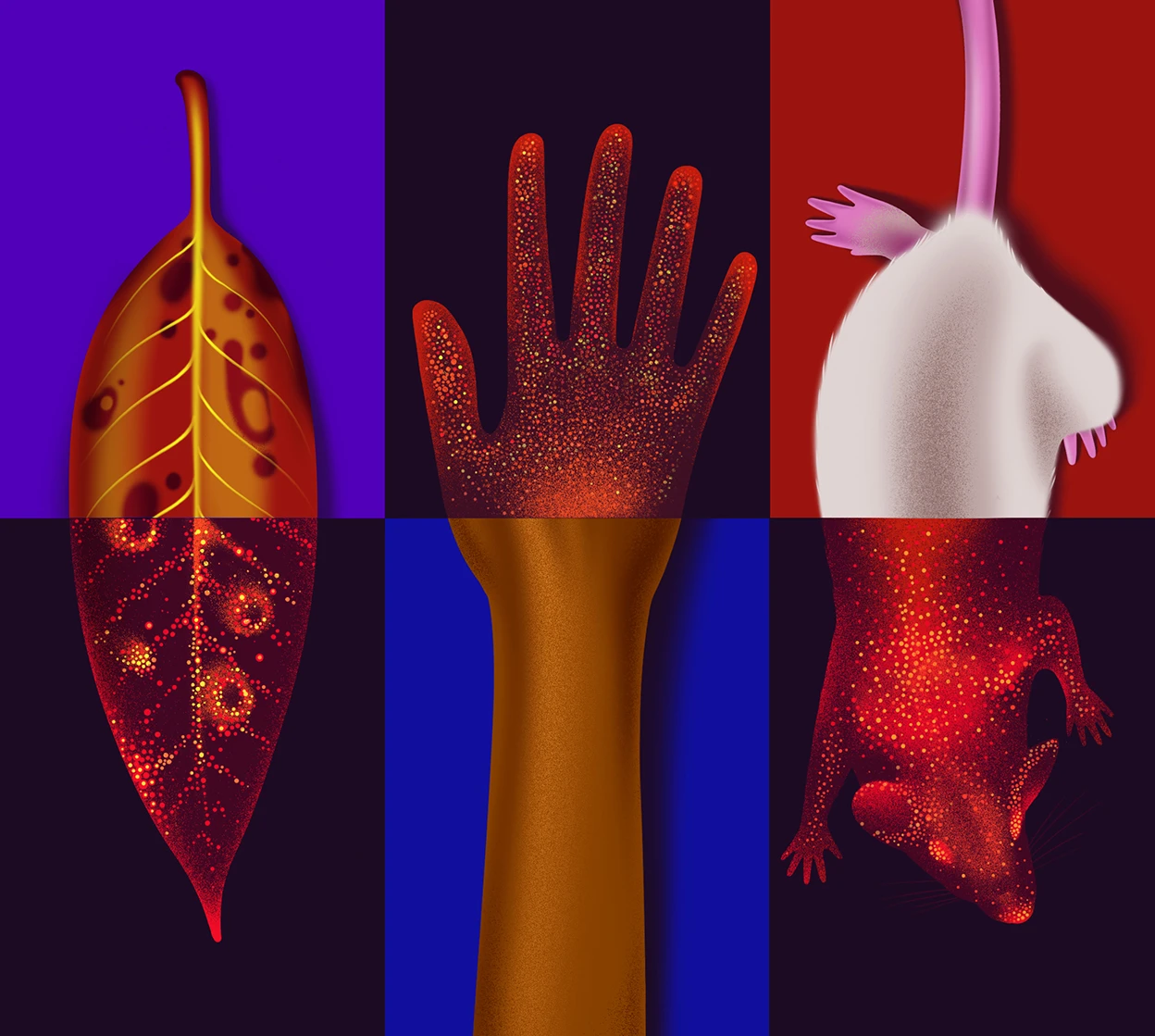
All living things emit an incredibly faint, invisible glow known as "biophotons," which are produced primarily by metabolic reactions in cell mitochondria. Long dismissed as pseudoscience due to unproven claims about human auras and quantum coherence, the field is gaining mainstream interest because of sensitive imaging technology.
One remarkable study was conducted by researchers from the University of Calgary in Canada, in which they captured the distinct glow of live mice compared to dead ones. The study demonstrated that emissions fluctuate with a cell's health and stress levels. Consequently, researchers are exploring biophotons as a non-invasive diagnostic tool to detect conditions such as cancer, cardiovascular disease, and neurodegenerative disorders by mapping the light emitted by damaged or altered tissue.
Beyond diagnostics, scientists are investigating the theory that biophotons serve as a hidden cellular communication network. While critics point out that these weak emissions could easily be swamped by background noise, studies show that cells separated by transparent barriers can influence one another's behavior and that certain cellular components are naturally equipped to absorb specific wavelengths of light. Some quantum physicists even speculate that the brain might utilize biophotons for advanced signaling, potentially using insulated nerve fibers as miniature fiber-optic cables to guide light. Though still highly speculative, proponents believe that proving the existence of light-based communication could fundamentally reshape our understanding of biological regulation and cognitive processing.
Read more from Nature.
| |
You might also like:
- Brightest Engineered Plants Glow Throughout Life Cycle
- Research Reveals the Light Mechanism that Regulates Rice Flowering Time
- Membrane-Free Organelles Help Plants Sense Light and Temperature
Biotech Updates is a weekly newsletter of ISAAA, a not-for-profit organization. It is distributed for free to over 22,000 subscribers worldwide to inform them about the key developments in biosciences, especially in biotechnology. Your support will help us in our mission to feed the world with knowledge. You can help by donating as little as $10.
-
See more articles:
-
Plant
- Researchers Identify Gene That Improves Soybean Cold Tolerance
- Genetic Trim Boosts Rice Yield by 25%
- Experts Propose Framework to Strengthen Insect Resistance Management for Bt Crops
- ASCA2026: Last Chance to Get Early Bird Discount
- Ugandan Farmers Show Strong Interest in Gene-Edited Cassava
-
Animal
- Researchers Dive Deep into Biophotons
-
Food
- Clemson Scientists Discover Reduced-Allergen Peanut Lines
- Study Reveals that Shifting to Healthier, More Sustainable Diets Would Reshape Global Agriculture by 2050
-
Read the latest: - Biotech Updates (September 9, 2026)
- Gene Editing Supplement (August 26, 2026)
- Gene Drive Supplement (February 22, 2023)
-
Subscribe to BU: - Share
- Tweet