

Experts Identify Protein Network Coordinating Iron Balance Across the Entire Plant
January 28, 2026| |
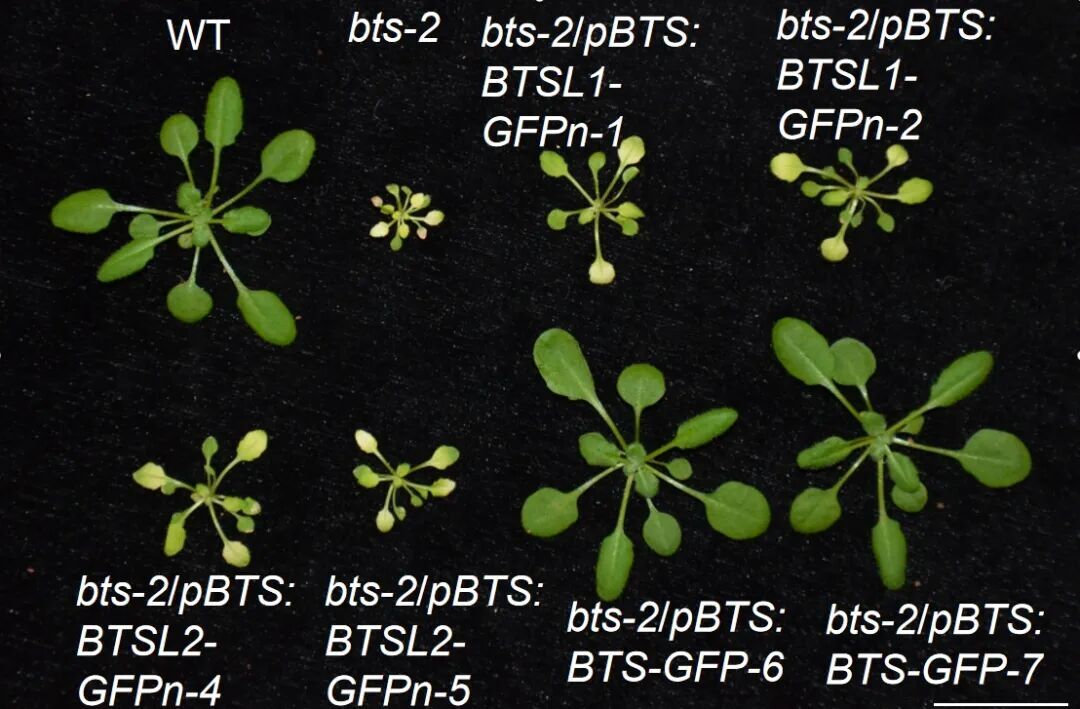
Researchers from the Xishuangbanna Tropical Botanical Garden (XTBG) of the Chinese Academy of Sciences (CAS) have uncovered a sophisticated protein network that regulates iron balance throughout a plant's body. This discovery, published in The Plant Cell, fills a critical knowledge gap regarding how plants coordinate essential nutrient levels between their roots and shoots to maintain health.
The study identified a functional division of labor among specific proteins to manage iron homeostasis. While previous research has primarily focused on root responses, this team found that the protein BRUTUS (BTS) plays a vital role in protecting shoots by preventing iron overaccumulation and toxicity. Meanwhile, its related proteins, BTS-LIKE1 and 2 (BTSL1/2), operate mainly in the roots to downregulate iron-deficiency responses. A group of transcription factors known as bHLH IVc acts as the central hub, interacting with these proteins to bridge the signaling gap between the roots and the aerial tissues.
The findings are significant because they solve a long-standing mystery regarding systemic iron signaling across a plant's biomass. By using Arabidopsis thaliana as a model, the researchers demonstrated that without these regulatory safeguards, plants suffer from leaf chlorosis and sterility due to oxidative stress. Lead researcher Liang Gang noted that identifying the bHLH IVc group as a mediator allows for a better understanding of how plants precisely balance nutrient uptake with metabolic needs, which could eventually inform more resilient crop development.
For more details, read the research news article on the CAS website.
| |
You might also like:
- CRISPR Confirms Rice Genes Responsible for Iron Uptake
- Iron Boosts Rice Immune System
- Salk Scientists Uncover Gene for Iron Tolerance in Plants
Biotech Updates is a weekly newsletter of ISAAA, a not-for-profit organization. It is distributed for free to over 22,000 subscribers worldwide to inform them about the key developments in biosciences, especially in biotechnology. Your support will help us in our mission to feed the world with knowledge. You can help by donating as little as $10.
-
See more articles:
-
Plant
- Pyramided Genes in Eucalyptus Confer High-dose Resistance to Brown Looper Caterpillar
- Scientists Discover Potential for Better Soybeans with Protection from Cyst Nematode
- Experts Identify Protein Network Coordinating Iron Balance Across the Entire Plant
- Early Bird Ends Soon: Get Our New Biotech Updates Subscription
- EFSA GMO Panel Finds Herbicide Tolerant Soybean MON 94313 Safe
- Media Exposure Influences GMO Perceptions in Montenegro
-
Animal
- Genetically Modified H3N1 Reduces Virulence of Avian Influenza
-
Food
- Canada Approves PRRSV-Resistant Pigs for Food and Feed Use
-
Read the latest: - Biotech Updates (September 23, 2026)
- Gene Editing Supplement (August 26, 2026)
- Gene Drive Supplement (February 22, 2023)
-
Subscribe to BU: - Share
- Tweet