

Genetic "Master Switch" Discovered to Control Tomato Ripening
March 25, 2026| |
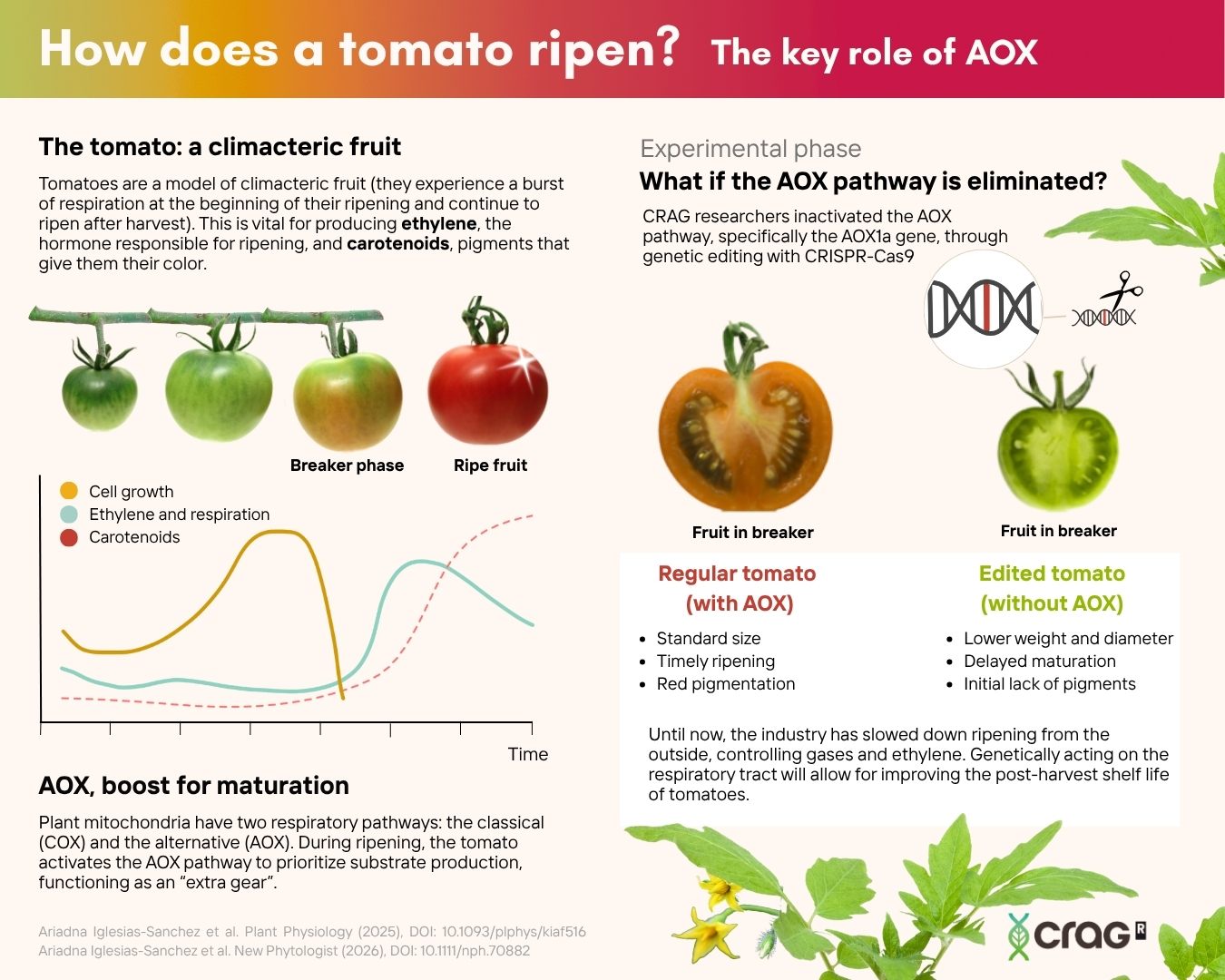
Scientists at the Centre for Research in Agricultural Genomics (CRAG) have identified a key genetic regulator that controls tomato ripening. The study identifies a specific regulatory network that governs the transition of the fruit from the growing to the ripening stage. By focusing on the master switches within the plant's DNA, the team has mapped how different genes interact to control the timing and quality of the fruit's maturation process, offering a precise blueprint for future agricultural improvements.
The team, led by IRTA researcher at CRAG, Igor Florez-Sarasa, with Ariadna Iglesias-Sanchez as first author, published in Plant Physiology the discovery that a specific mitochondrial route, known as the alternative oxidase pathway (AOX), is the main engine enabling this transformation. They discovered that AOX pathway activity spikes when the tomato starts changing color, becoming the main support of fruit respiration. Using CRISPR‑Cas9 gene editing, the team deactivated the AOX1a gene in tomato plants, resulting in mutant tomatoes that took much longer to ripen. The researchers observed altered ripening-related metabolites in the mutants. Fruit with a deficiency in the AOX pathway was unable to accumulate key amino acids, such as aspartate and methionine, which are essential for the synthesis of ethylene.
This breakthrough holds transformative potential for the global food supply chain and the fight against food waste. By using this genetic information, breeders and biotechnologists can develop new fruit varieties with extended shelf lives and enhanced resilience during transport. Such innovations could significantly reduce the volume of produce lost to over-ripening before it reaches consumers, while simultaneously improving the sensory qualities of store-bought fruit. As the agricultural sector faces increasing pressure from climate change, these "smart" ripening traits represent a vital tool for ensuring sustainable and efficient food production.
For more details, read the article in CRAG News.
| |
You might also like:
- Gene Editing Accelerates Fruit Ripening and Increases Fruit Firmness of Tomato
- Gene Editing Improves Fruit Quality of Tomatoes
- Genetic Pathway Found to Boost Tomato Yield Without Affecting Quality
Biotech Updates is a weekly newsletter of ISAAA, a not-for-profit organization. It is distributed for free to over 22,000 subscribers worldwide to inform them about the key developments in biosciences, especially in biotechnology. Your support will help us in our mission to feed the world with knowledge. Support ISAAA by subscribing as a Premium or Elite Subscriber
-
See more articles:
-
Gene Editing Supplement (March 25, 2026)
-
Research and Tools
- Researchers Develop Gene Editing Toolkit for Trait Stacking in Soybean
- Genetic "Master Switch" Discovered to Control Tomato Ripening
- Experts Recommend Climate-adaptive Breeding Pipeline for Rice
- CRISPR Boosts Tobacco Growth Under Osmotic Stress
-
Read the latest: - Biotech Updates (October 14, 2026)
- Gene Editing Supplement (September 30, 2026)
- Gene Drive Supplement (February 22, 2023)
-
Subscribe to BU: - Share
- Tweet