

CRISPR Rice Exhibits Improved Photosynthesis Under Drought Stress
January 28, 2026| |
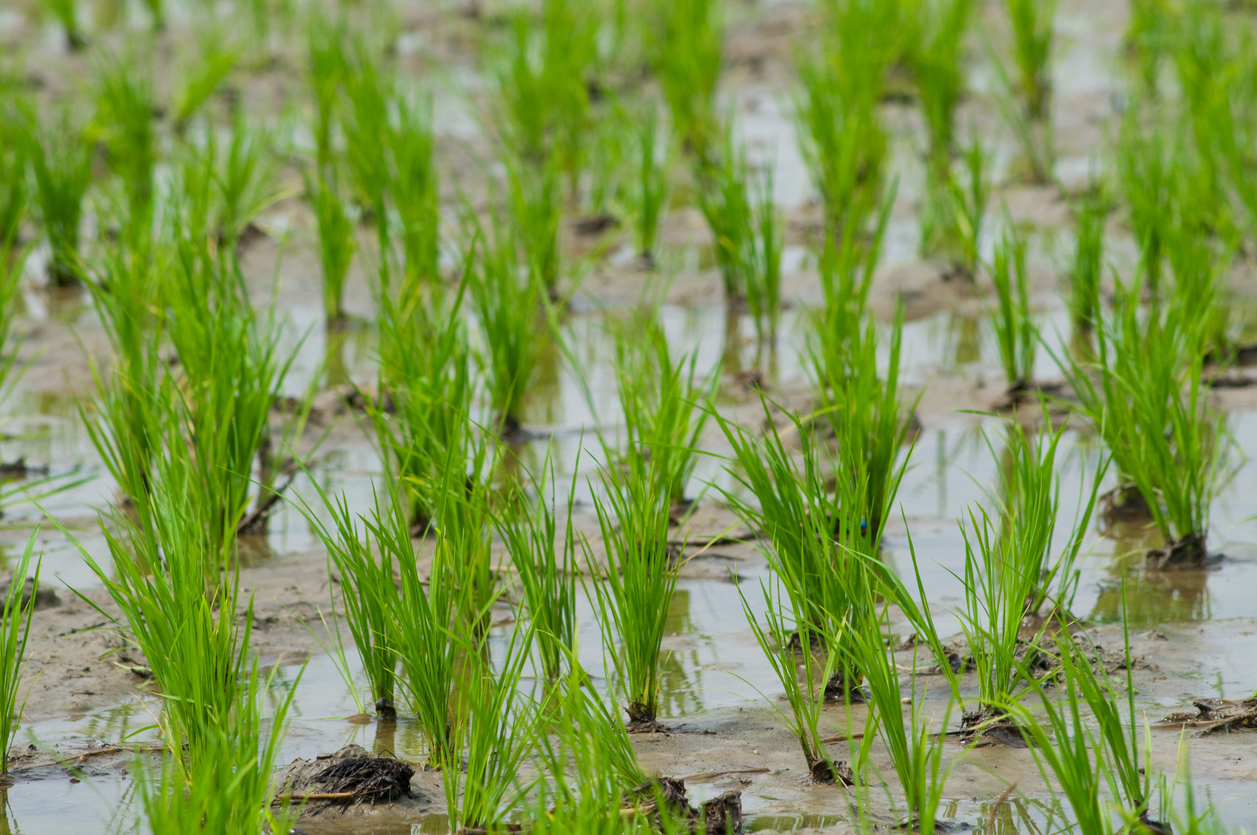
Plants have natural survival mechanisms that sometimes work against them during extreme weather conditions. Within a plant's cells, there are membrane lipids that act as messengers. When a plant experiences stress such as drought, an enzyme called Phospholipase D (PLD) breaks the membrane lipids down to send signals. However, in rice plants, one specific version of this enzyme, known as OsPLDβ1, can actually make the plant more vulnerable to damage.
Using gene editing technology, a group of researchers from the International Centre for Genetic Engineering and Biotechnology and other institutions turned off OsPLDβ1 to develop a hardier version of rice that stays healthier even when water is scarce. The results, published in Plant Physiology and Biochemistry, showed that the gene-edited rice plants were much better at defending themselves against drought.
When plants are exposed to drought, toxic molecules called reactive oxygen species accumulate, which affects seedlings and leaves. The gene-edited rice plants, however, produced more protective antioxidants, which kept their roots growing and their photosynthesis running smoothly. Because these plants suffered less internal damage and had a higher survival rate, this discovery offers a promising way to breed climate-resilient crops that can thrive despite the unpredictable weather patterns caused by climate change.
Read the research article for more findings.
| |
You might also like:
- Plant Breeding Innovation: CRISPR-Cas9
- High-yield Rice Emits up to 70% Less Methane
- Researchers Use CRISPR to Develop Rice Plants with High Salt Resistance
Biotech Updates is a weekly newsletter of ISAAA, a not-for-profit organization. It is distributed for free to over 22,000 subscribers worldwide to inform them about the key developments in biosciences, especially in biotechnology. Your support will help us in our mission to feed the world with knowledge. You can help by donating as little as $10.
-
See more articles:
-
Gene Editing Supplement (January 28, 2026)
-
Research and Tools
- KAMALA: The First Gene-edited Variety Ready for Cultivation in India
- Gene Editing Produces Transgene-Free Potato with Reduced Postharvest Browning
- Berkeley Lab Researchers Develop "Speed Scanner" to Map Thousands of Plant Gene Switches
- CRISPR Rice Exhibits Improved Photosynthesis Under Drought Stress
-
Read the latest: - Biotech Updates (September 16, 2026)
- Gene Editing Supplement (August 26, 2026)
- Gene Drive Supplement (February 22, 2023)
-
Subscribe to BU: - Share
- Tweet