

High-Zinc Rice Achieves High Yield in Ilocos Norte Pilot in the Philippines
July 15, 2026| |
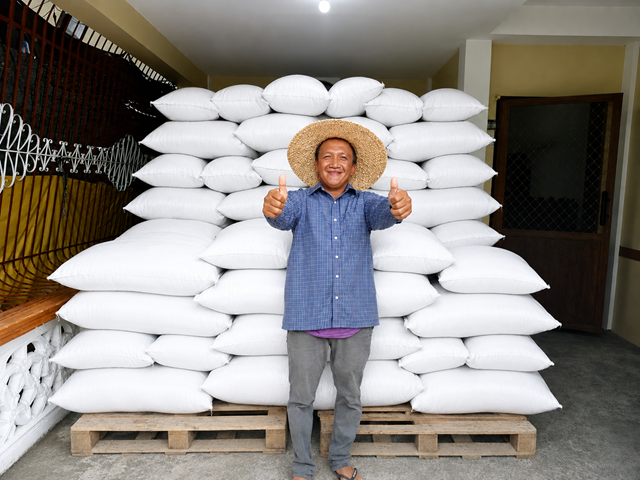
The Department of Agriculture-Philippine Rice Research Institute (DA-PhilRice) has announced a successful pilot harvest of Zinc Rice 2 (NSIC Rc 648) in Ilocos Norte. The high-zinc rice variety achieved impressive yields during local field trials, demonstrating its ability to match or exceed the performance of conventional inbred rice varieties.
The field performance demonstrated Zinc Rice 2's high productivity under the unique climatic conditions of Ilocos Norte. Local agricultural experts and farmer-cooperators noted that the crop required standard farming inputs, meaning small-scale farmers would not face increased production costs to cultivate it. Farmer Ricky A. de Guzman from Brgy. Sta. Cecilia, San Nicolas, harvested 8.14 t/ha from Zinc Rice 2 (NSIC Rc 648), which was higher than the 4.07 t/ha national average palay (rice) yield across all ecosystems in this year's first quarter. It also exceeded the variety's reported yield potential of 4–7.4 t/ha under favorable growing conditions. The successful harvest is expected to boost local interest and accelerate the variety's widespread adoption across adjacent farming communities.
Developed to combat widespread public health issues, Zinc Rice 2 was developed by PhilRice to help the country identify alternatives to complement efforts to address child stunting and micronutrient deficiencies.
For more details, read the article on the PhilRice website.
| |
You might also like:
- Philippines Approves Commercial Propagation of High Iron and Zinc Rice
- Iron-biofortified Rice Developed to Help Combat Iron Deficiency Anemia
- ISAAA GM Approval Database | Event Name: HIZ039
Biotech Updates is a weekly newsletter of ISAAA, a not-for-profit organization. It is distributed for free to over 22,000 subscribers worldwide to inform them about the key developments in biosciences, especially in biotechnology. Your support will help us in our mission to feed the world with knowledge. You can help by donating as little as $10.
-
See more articles:
-
Plant
- Gene Editing Improves Rice Resistance to Yellow Mottle Virus
- Experts Call for Stronger Farmer Education on Gene-Edited Crops
- Scientists Unlock Mung Bean Genetic Secrets in Breakthrough Global Study
- Join ASCA2026 in Malaysia
- High-Zinc Rice Achieves High Yield in Ilocos Norte Pilot in the Philippines
- EFSA Proposes Streamlined Risk Assessment for Stacked GM Crops
- Camp Helix Strengthens Interest in Agri-biotech Among SHS Learners and Teachers
-
Environment
- UN Releases SDG Progress Report
-
Read the latest: - Biotech Updates (October 7, 2026)
- Gene Editing Supplement (September 30, 2026)
- Gene Drive Supplement (February 22, 2023)
-
Subscribe to BU: - Share
- Tweet