Cornell Launches Global Initiative for Science-based Communication on Agri-biotech |
 Cornell University launched a new initiative aimed at intensifying the voice of science in the agri-biotechnology dialogue. The initiative is called Cornell Alliance for Science. According to Sarah Evanga, Director of the Alliance, the initiative is a "radical collaboration" of global significance because the challenges faced by the global society are too large to be handled by disconnected individuals and institutions. Thus, a radical strategy of forming a radical collaboration should be focused on facing the hunger and not on GMO politics. Cornell University launched a new initiative aimed at intensifying the voice of science in the agri-biotechnology dialogue. The initiative is called Cornell Alliance for Science. According to Sarah Evanga, Director of the Alliance, the initiative is a "radical collaboration" of global significance because the challenges faced by the global society are too large to be handled by disconnected individuals and institutions. Thus, a radical strategy of forming a radical collaboration should be focused on facing the hunger and not on GMO politics.
|
|
|
|
|
|
|
Scientists Evaluate Insect Resistant Plants Expressing Spider Venom Toxin (Hvt) |
 Spiders produce peptide ω-Hexatoxin-Hv1a (Hvt), a venom toxin with proven insecticidal properties against arthropods belonging to orders Lepidoptera, Diptera, and Orthroptera. The gene coding for Hvt has been transferred into cotton and tobacco to develop plants with resistance to lepidopteran pests. Researchers from National Institute for Biotechnology and Genetic Engineering (NIBGE), Pakistan and partners assessed the expression of the ω-HXTX-Hv1a gene in transgenic plants, and the toxicity of plant-expressed and purified Hvt on target lepidopteran insects and on several non-target species. Insect resistant cotton (Bollgard II) plants were included in the study as comparators. Spiders produce peptide ω-Hexatoxin-Hv1a (Hvt), a venom toxin with proven insecticidal properties against arthropods belonging to orders Lepidoptera, Diptera, and Orthroptera. The gene coding for Hvt has been transferred into cotton and tobacco to develop plants with resistance to lepidopteran pests. Researchers from National Institute for Biotechnology and Genetic Engineering (NIBGE), Pakistan and partners assessed the expression of the ω-HXTX-Hv1a gene in transgenic plants, and the toxicity of plant-expressed and purified Hvt on target lepidopteran insects and on several non-target species. Insect resistant cotton (Bollgard II) plants were included in the study as comparators.
|
|
|
|
|
Researchers Use Tobacco Plants to Combat Ebola Outbreak |
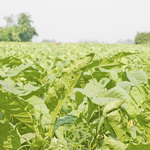 Ebola virus causing hemorrhagic fever is fast spreading in some areas of Africa since December 2013 leading to over 1,000 deaths. Thus, scientists are speeding up the development of drugs and vaccines that could end the outbreak. Ebola virus causing hemorrhagic fever is fast spreading in some areas of Africa since December 2013 leading to over 1,000 deaths. Thus, scientists are speeding up the development of drugs and vaccines that could end the outbreak.
|
|
|
|
|
|
|

|
A biweekly update on gene editing research, regulations, and impact
produced by ISAAA Inc. |
| |
|
|

|
| A monthly update on gene drive research and development provided by ISAAA in collaboration with the Outreach Network for Gene Drive Research |
| |
|
|
|
|
|
|

 Vietnam's Ministry of Agriculture and Rural Development (MARD) has granted licenses to four