

Penn State Researchers Develop “Snowball” Cells for Large-Scale Tissue Engineering
April 8, 2026| |
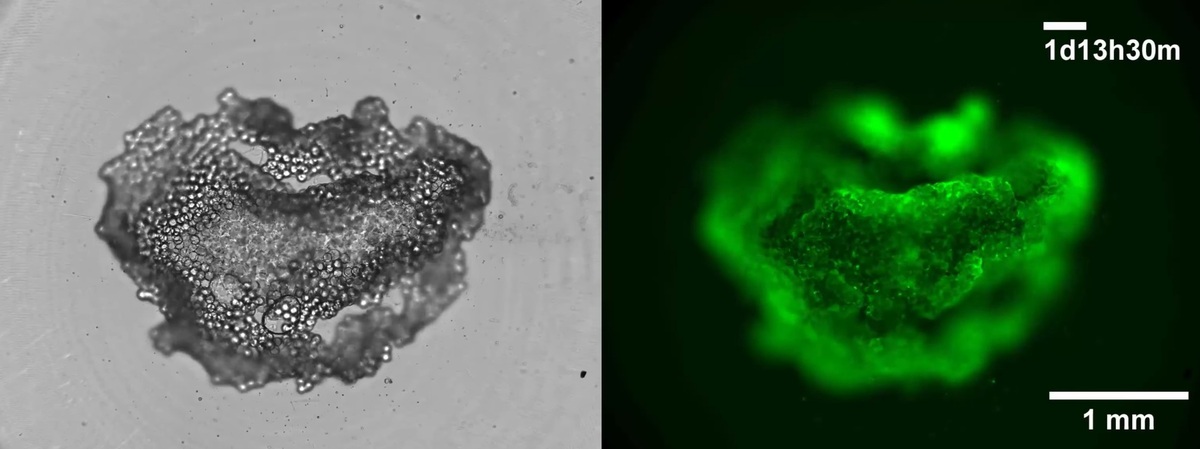
Researchers at Pennsylvania State University have developed a new assembly method to grow cell spheroids that could advance large-scale tissue engineering. The new technology, described in Advanced Science, introduces biohybrid spheroids that can rapidly self-assemble or “snowball” in size while maintaining cell survival.
Cells comprising spheroids face key limitations, including poor oxygen and nutrient diffusion to inner cells, an absence of waste removal, and a lack of structural support. To address these issues, the researchers combined living cells with microgels–tiny materials that mimic the supportive tissue that surrounds cells in the body. This design allows oxygen and nutrients to penetrate deeper into the structure, improving cell function and viability as the spheroids grow.
The findings suggest that biohybrid spheroids can overcome major barriers in tissue engineering. The team plans to refine the technology further to better replicate real tissues, with the long-term goal of enabling scalable tissue production and organ biofabrication.
For more information, read the article from the Pennsylvania State University.
| |
You might also like:
- Plant Tissue Engineering Improves Drought and Salinity Tolerance in Arabidopsis
- Technique Genetically Transforms Succulents Without Tissue Culture
- Biomedical Engineers Use Silkworms to Enhance Organ-Like Tissues Grown in the Lab
Biotech Updates is a weekly newsletter of ISAAA, a not-for-profit organization. It is distributed for free to over 22,000 subscribers worldwide to inform them about the key developments in biosciences, especially in biotechnology. Your support will help us in our mission to feed the world with knowledge. Support ISAAA by subscribing as a Premium or Elite Subscriber
-
See more articles:
-
Plant
- New Software Tool Helps Scientists Design and Analyze Gene Regulation
- Scientists Develop Ultra-Low Asparagine Wheat Using Precision Breeding to Improve Food Safety
- Experts Develop CasY7 for Better Gene Editing of Crops
- Penn State Researchers Develop “Snowball” Cells for Large-Scale Tissue Engineering
- Seed Banks May Slow Gene Drives for Weed Control
- IGI Researchers Unveil CRISPR Breakthrough to Supercharge Photosynthesis
- Biotech Updates: Corporate Subscriptions Now Available
-
Food
- Study Finds How Visual Cues Drive GMO Polarization
-
Read the latest: - Biotech Updates (October 14, 2026)
- Gene Editing Supplement (September 30, 2026)
- Gene Drive Supplement (February 22, 2023)
-
Subscribe to BU: - Share
- Tweet