

New Technique Allows Fine-tuning Proteins in Animal Tissues
December 17, 2025| |
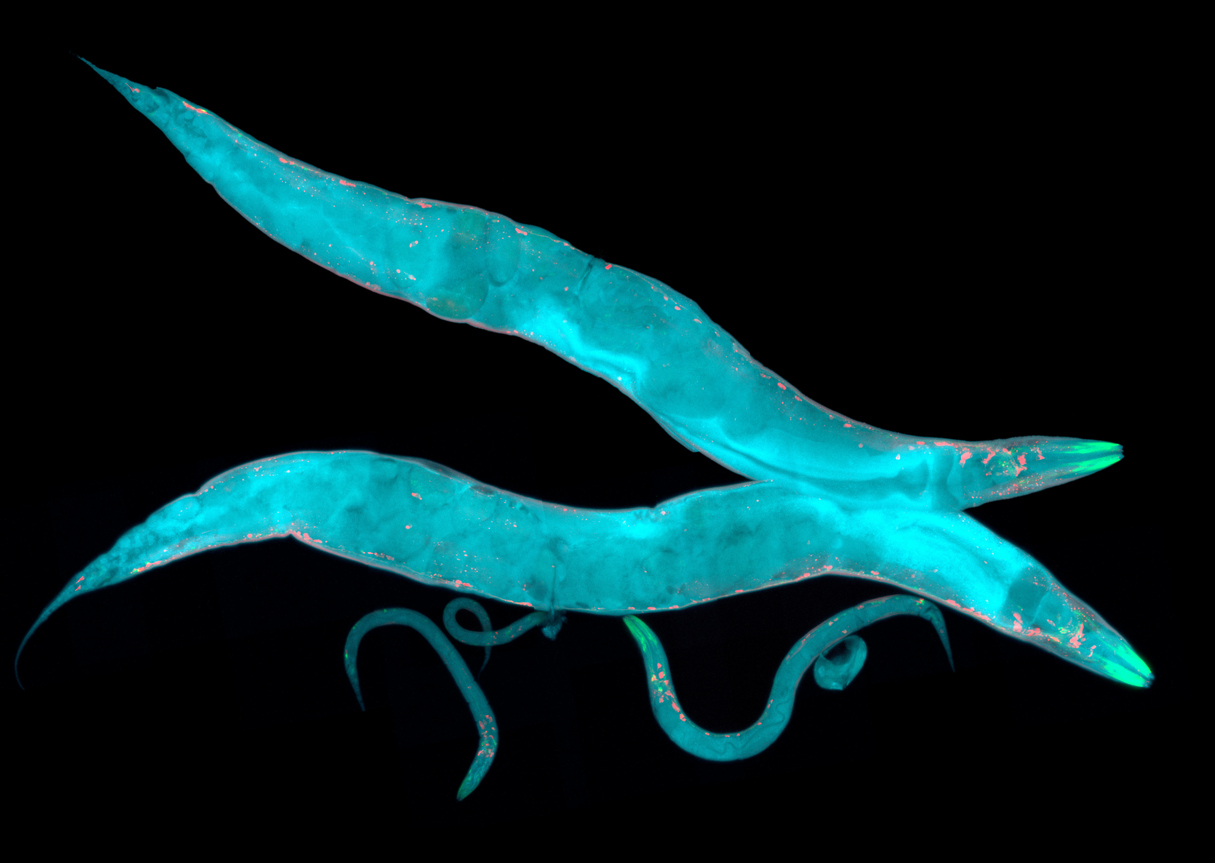
Scientists at the Centre for Genomic Regulation in Barcelona and the University of Cambridge developed a method that allows precise, lifelong control of protein levels inside different tissues of a living animal. The new technique, demonstrated successfully in nematode worm Caenorhabditis elegans, opens up more ways to study ageing, disease, and whole-body biological coordination.
One of the limitations faced by experimental biology researchers is the inability to fine-tune the amount of protein in tissues over an animal's lifetime. They were able to delete proteins, switch off genes, but the limitation in controlling how much protein is present in tissues slowed down the research on ageing and understanding how organs influence each other at the molecular level.
Based on a plant system involving the hormone auxin, the researchers developed the auxin-inducible degron (AID) system. Through this system, the researchers tag a protein with a degron, and then an enzyme (TIR1) recognizes the tag and disrupts the protein when auxin is detected. When auxin is absent, the protein returns. This system became their basis for a more flexible version called the dual-channel AID system. They developed a new version of TIR1 and matching degron tags. Each enzyme reacts to various auxin compounds, and by placing these enzymes in different tissues, they were able to independently control the same protein in neurons and intestines.
Read more findings in Interesting Engineering and Nature Communications.
| |
You might also like:
- Gene-Edited Animals for Agricultural Applications Database
- Emerging Innovations and Policies in Animal Biotech in the Philippines
- Pocket K No. 55: Biotech-improved Animals
Biotech Updates is a weekly newsletter of ISAAA, a not-for-profit organization. It is distributed for free to over 22,000 subscribers worldwide to inform them about the key developments in biosciences, especially in biotechnology. Your support will help us in our mission to feed the world with knowledge. You can help by donating as little as $10.
-
See more articles:
-
Plant
- EFSA GMO Panel Releases Scientific Opinion on the Assessment of Three-Event Stack GM Cotton
- Genetic Pathway Found to Boost Tomato Yield Without Affecting Quality
- GM Cowpea Boosts Yields and Profits for Smallholder Farmers in Nigeria
- IRRI Unveils New Whole-Grain ‘Super Rice' to Combat Climate Change and Malnutrition
- Colombian Seed Sector Celebrates Progress in GM Technology
-
Animal
- New Technique Allows Fine-tuning Proteins in Animal Tissues
- Transmission Zero Develops the First GM Mosquitoes to Stop Malaria Transmission in Tanzania
-
Food
- Tufts University Engineers Bacteria to Develop Healthier Sugar Substitute
-
Read the latest: - Biotech Updates (September 16, 2026)
- Gene Editing Supplement (August 26, 2026)
- Gene Drive Supplement (February 22, 2023)
-
Subscribe to BU: - Share
- Tweet