

Global Adoption to Local Policy: Charting Future Directions for Biotech Crops in Vietnam
| |
More than a decade after Vietnam first introduced genetically modified (GM) corn into commercial cultivation, nearly 80 onsite and 120 online participants alongside 975 Facebook Live viewers comprised of policymakers, scientists, industry leaders, farmers, and the media convened on November 10, 2026, at Hoa Binh Hotel in Hanoi, Vietnam, and online via Zoom for the hybrid workshop "Biotech Crops: Global Trends and Future Directions for Vietnam”. Co-organized by the Ministry of Agriculture and Environment (MAE), Vietnam Agriculture and Nature Newspaper (VAEN), ISAAA Inc., CropLife Vietnam, and CropLife Asia, the forum tackled 29 years of global agricultural biotechnology data alongside Vietnam’s next major policy milestone: establishing a clear regulatory pathway for gene-edited crops.
An Urgent Priority for Modern Agriculture
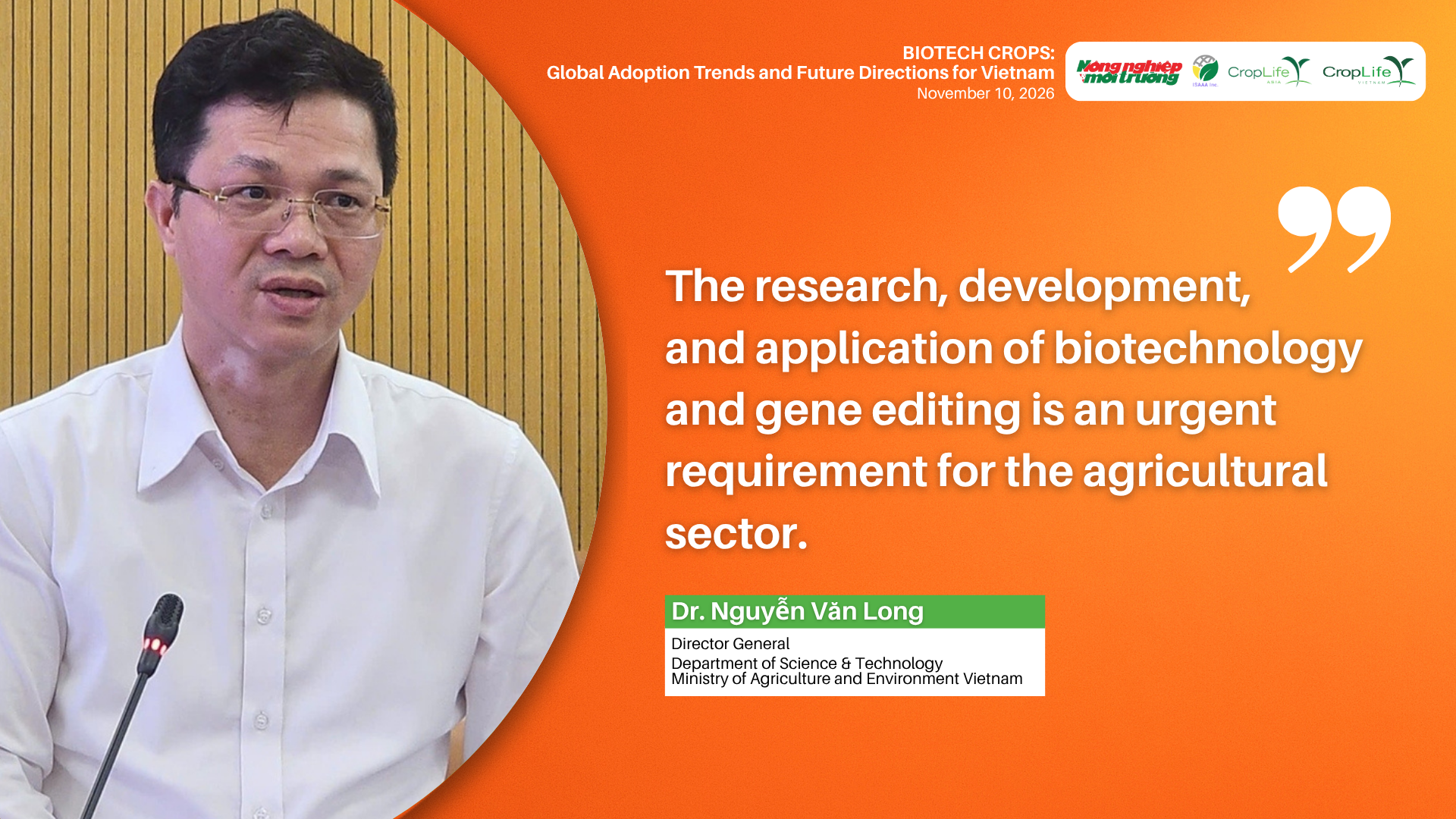
Dr. Nguyen Van Long, Director General of the Department of Science and Technology (MAE), opened the workshop by underscoring the pressing need for Vietnam’s agricultural sector to embrace modern breeding innovations to sustain growth and competitiveness. Framing biotechnology as a strategic priority for the country's modernization, Dr. Long stated that the research, development, and application of biotechnology and gene editing are urgent requirements for the agricultural sector.
Global Biotech Crop Adoption Trends and the Role of Political Suppor
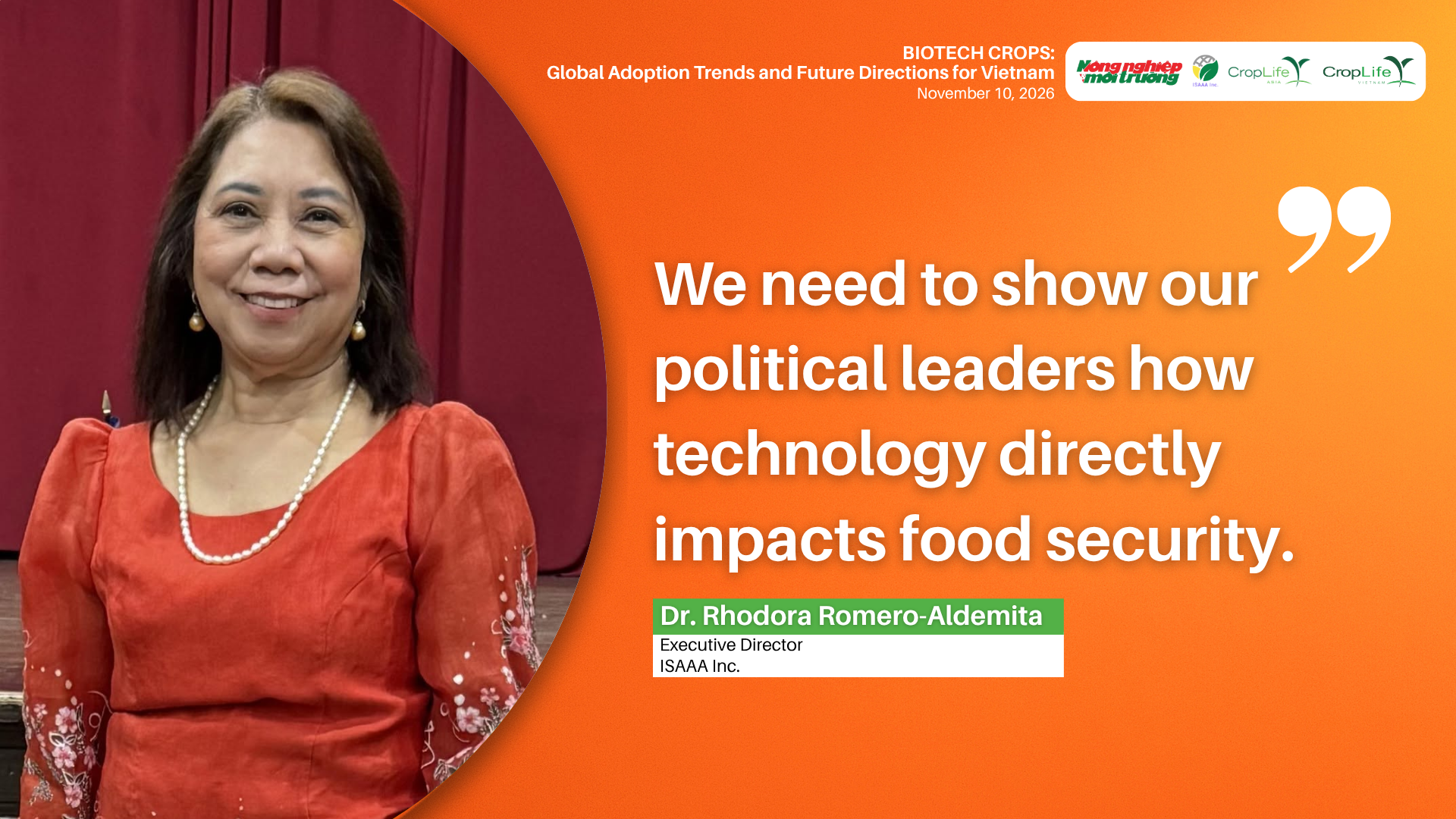
Dr. Rhodora Romero-Aldemita, Executive Director of ISAAA Inc., presented a four-point roadmap for scaling up crop biotechnology across the Asia-Pacific region based on takeaways from ISAAA Brief 57: Global Status of Commercialized Biotech/GM Crops in 2024. The report showed that global GM crop cultivation reached a record 218.7 million hectares in 2024, with 31 cultivating countries. Concluding her presentation on the need to translate scientific progress into real-world adoption, she emphasized that we need to show political leaders how technology directly impacts food security to ensure inclusive development and support at the highest levels of government.
How 29 Years of Biotech Crop Adoption Support Food Security and Sustainability
Building on global adoption trends, agricultural economist Graham Brookes of PG Economics presented findings from his 16th global review covering 1996 to 2024. His report highlighted the socioeconomic and environmental benefits of biotech crop adoption over the past 29 years, including increased farm income and agricultural production, as well as reduced pesticide use.
Underscoring how crop biotechnology contributes to global food security while reducing pressure to convert new land into farmland, Mr. Brookes noted that the extra production biotechnology delivered in 2024 would have required the world to plant an additional 25.5 million hectares of agricultural land using conventional technology.
Mr. Brookes added that this single-year land saving is roughly equal to the combined agricultural area of the Philippines and Vietnam.
Vietnam’s Regulatory Landscape and Domestic Adoption
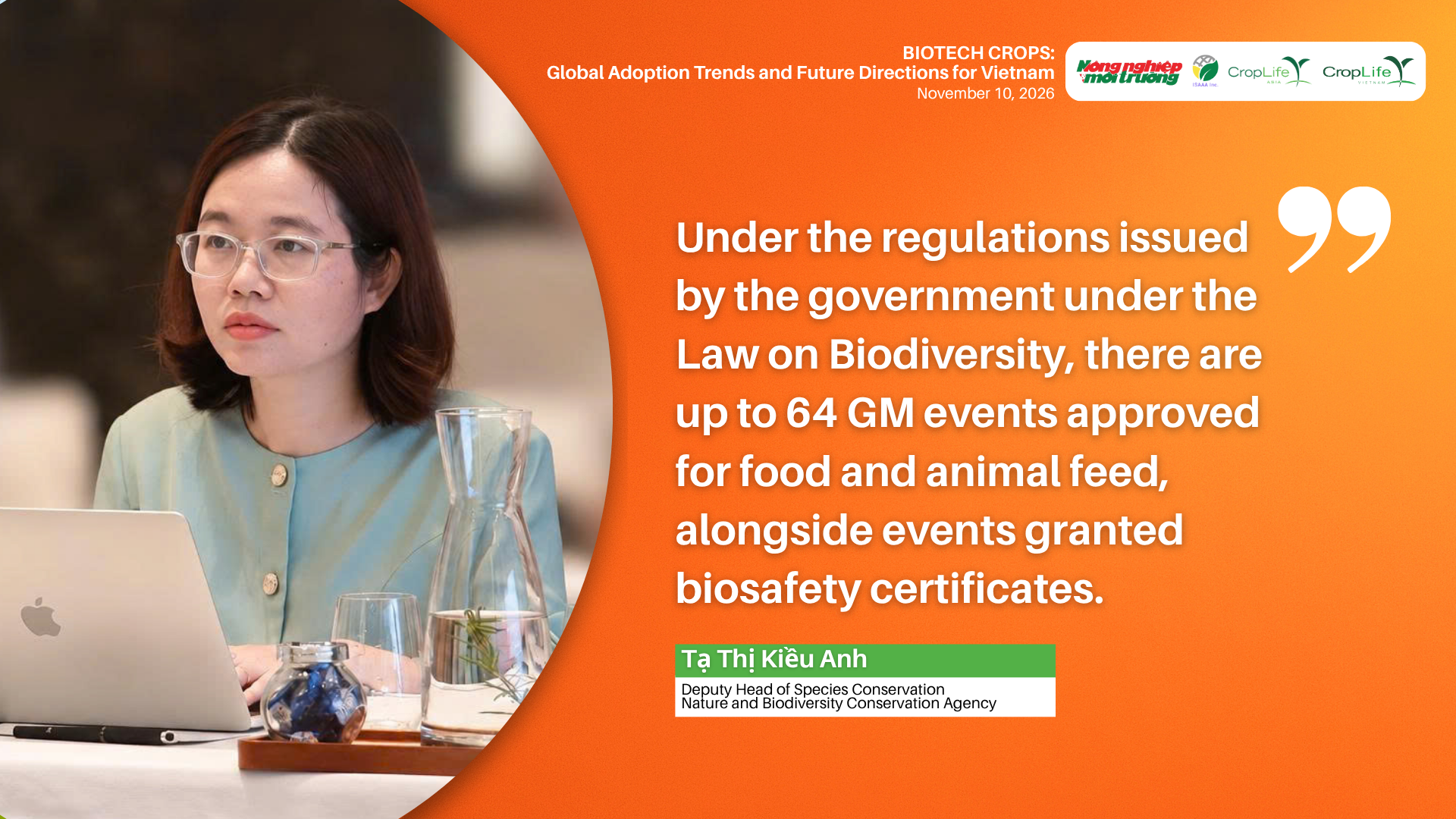
Turning to Vietnam’s domestic landscape, Ms. Ta Thi Kieu Anh of the National Biodiversity Conservation Agency outlined the country’s biosafety governance, detailing strict field-testing protocols, risk assessments, and approval procedures. Highlighting Vietnam's regulatory track record, she noted that under the regulations issued by the government under the Law on Biodiversity, there are up to 64 GM events approved for food and animal feed, alongside events granted biosafety certificates.
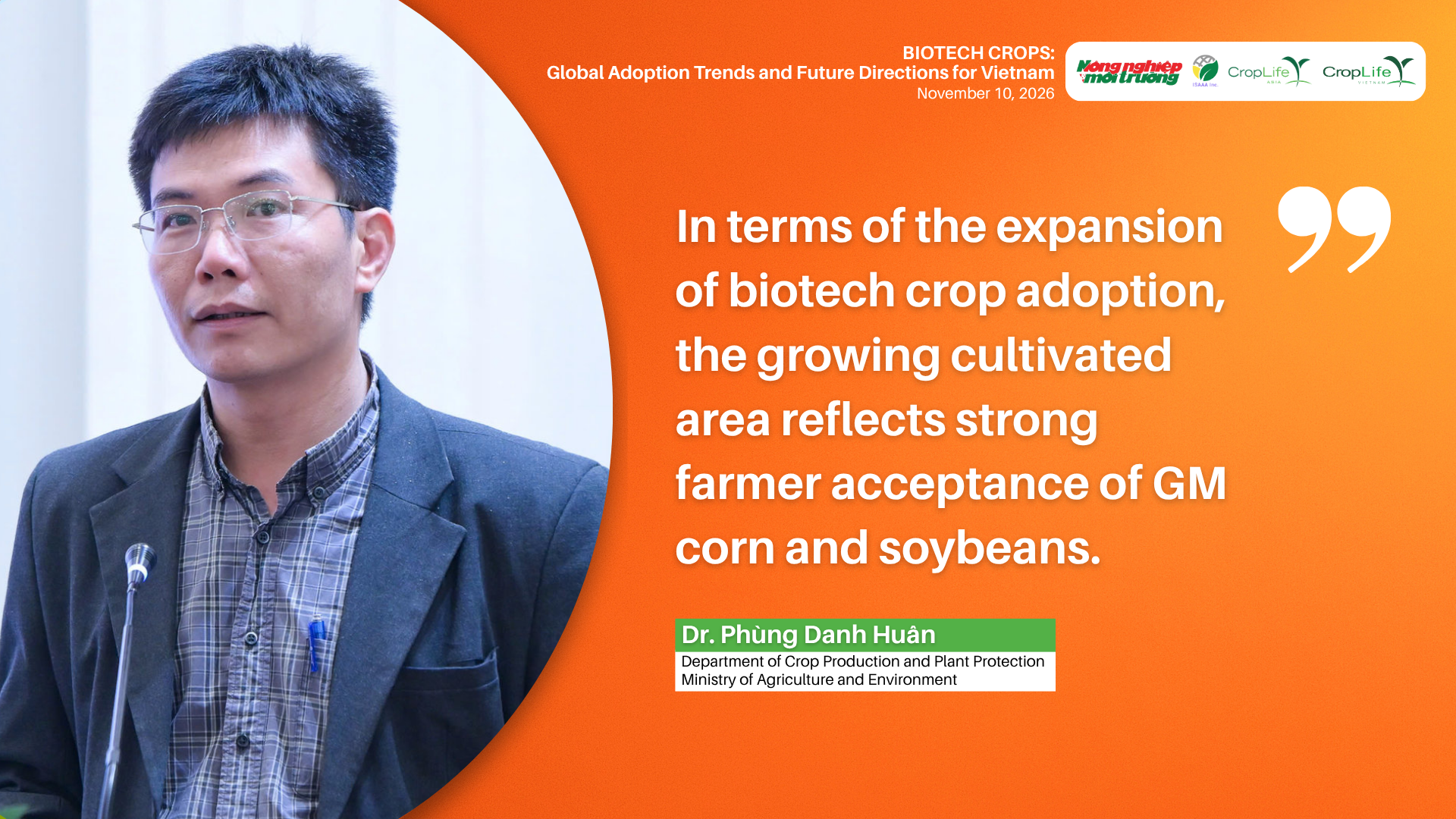
In the field, Dr. Phung Danh Huan of the Department of Crop Production and Plant Protection shared that GM corn now covers roughly half of Vietnam's total corn area since commercial planting began in 2015. The research he presented at the workshop also showed positive impacts on yield, pest management, production costs, and farm income, with Dr. Huan noting that in terms of the expansion of biotech crop adoption, the growing cultivated area reflects strong farmer acceptance of GM corn and soybeans.
The Path Forward for Biotech and Gene-Edited Crops in Vietnam
During the panel discussion, moderated by Dr. Nguyen Thi Thanh Thuy, Vice Chair of the Vietnam Association of Gardening, and Mr. Tran Cao, Deputy Editor-in-Chief of VAEN, regulators from MAE, veteran scientists, seed association leaders, international experts, and farmers touched base and identified several priorities:
- Strengthen political backing and science communication to educate policymakers and the public, while expanding biotech adoption into new crops and traits that boost farmers' net income.
- Establish a transparent and publicly verifiable record of notified gene-edited products to provide greater regulatory certainty for developers.
- Prioritize R&D on economically valuable traits for farmers while aligning Vietnam's gene-editing standards with international markets to prevent agricultural export barriers.
- Clarify how gene-edited crop notification procedures connect with conventional crop variety registration and commercialization requirements.
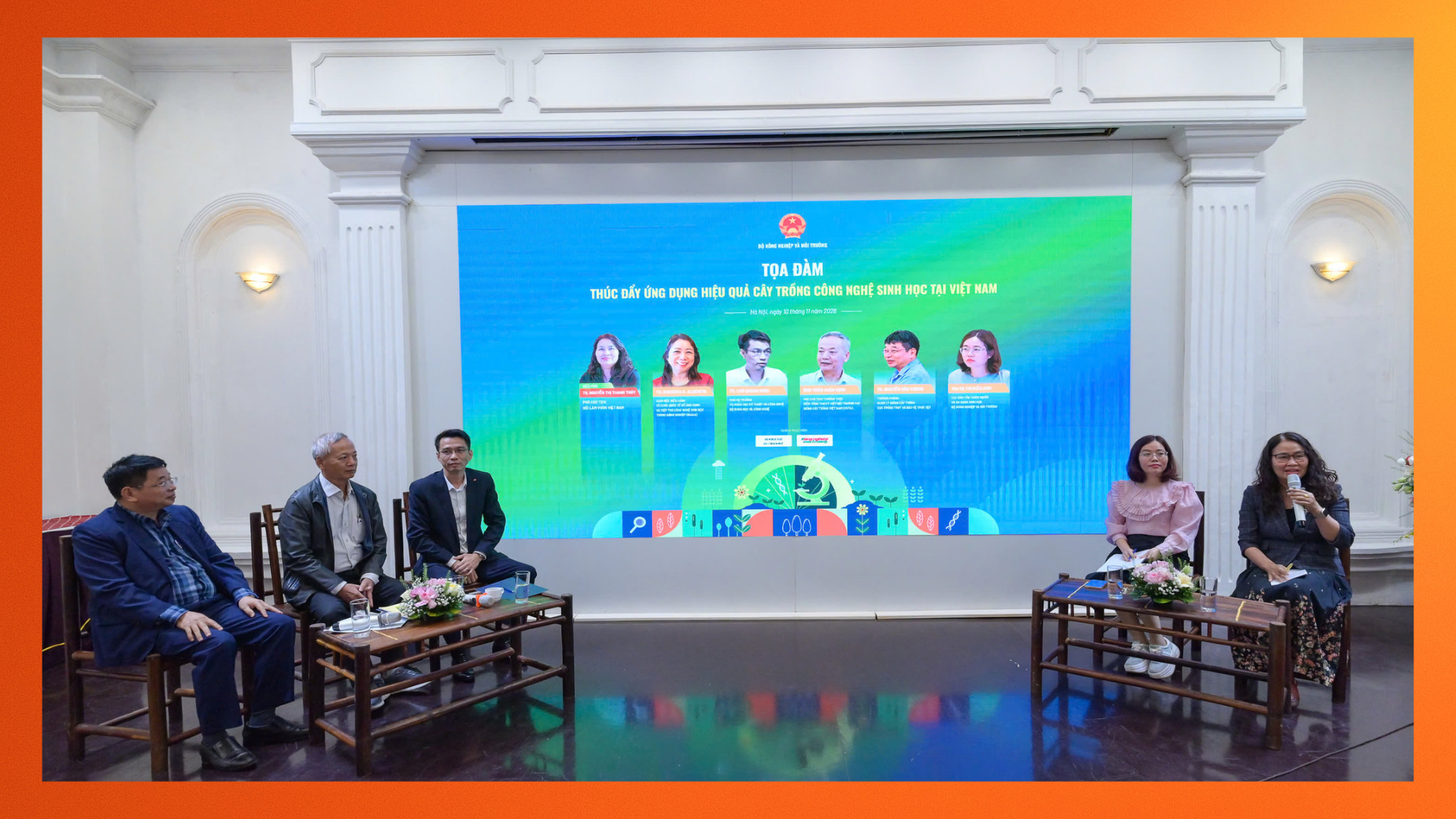
Photo Source: Vietnam.vn
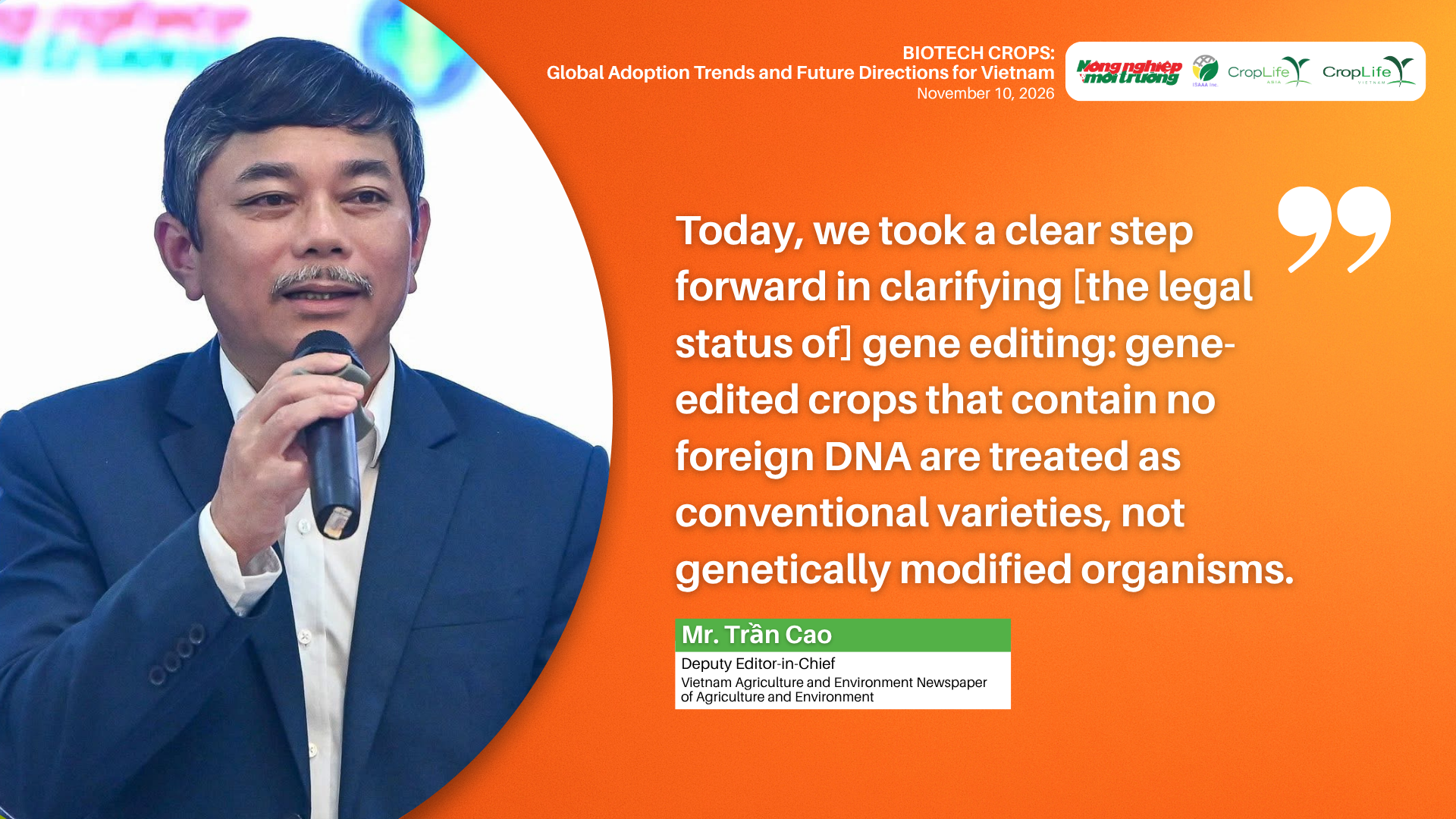
Mr. Tran Cao wrapped up the workshop by highlighting the major consensus reached among stakeholders on how Vietnam classifies new breeding innovations, stating that gene-edited crops with no foreign DNA are treated as conventional varieties, not genetically modified organisms.
Realizing the full potential of this evolving regulatory framework will take sustained collaboration among regulators, scientists, and farmers. To carry this momentum forward, insights from the workshop will inform a policy proposal for the prime minister of Vietnam, recommending targeted updates to remove existing barriers and bring more biotech innovations into everyday farm production.
To view the presentation slides and discussions, access the full recording on ISAAA Webinars.
| Newer Post | Archive | Older Post |
Science Speaks is ISAAA Inc.'s official blog. Weekly blog articles, authored by ISAAA writers, partners, and invited contributors, aim to help share, disseminate, and promote scientific knowledge and its vital role in achieving global agricultural sustainability and development. Your support to Science Speaks will help us achieve this goal. Support ISAAA by subscribing as a Premium or Elite Subscriber