
IWRAAAAB 2025 Bridges Science and Policy for Animal Biotechnology
| |
Experts gathered at the International Conference Centre in Ghent, Belgium, on November 6-7, 2025, for the Sixth International Workshop on Regulatory Approaches for Agricultural Applications of Animal Biotechnologies (IWRAAAAB 2025). The workshop was held alongside the International Society for Biosafety Research (ISBR) conference from November 2 to 6, 2025. Dr. Alison Van Eenennaam, an animal geneticist from the University of California, Davis, organized ISBR Parallel Session 4 on November 3, entitled Global Status of Animal Biotechnology Regulations. The session’s discussions include updates on animal biotechnology regulatory considerations in Europe, Asia-Oceania, Africa, and the Americas.
IWRAAAAB 2025, organized by UC Davis, ISAAA Inc., ISAAA AfriCenter, and the Inter-American Institute for Cooperation on Agriculture (IICA), brought together 51 attendees representing 25 countries to discuss the latest developments in animal biotechnology and to share best practices for regulation and oversight. The workshop kicked off with a deep dive into the global status of animal biotechnology regulations, featuring insights from leaders across Europe, Asia-Oceania, Africa, and the Americas. A key theme was the emergence of New Genomic Techniques (NGTs) and how different jurisdictions are navigating their oversight.
The attendees for the IWRAAAAB 2025 meeting were from Argentina (5), Australia (2), Belgium (2), Brazil (2), Canada (2), Colombia (1), Costa Rica (2), Ethiopia (1), Germany (2), Honduras (1), India (2), Italy (1), Japan (2), Kenya (5), Netherlands (2), Nigeria (1), Paraguay (1), Philippines (3), Senegal (1), Thailand (2), Uganda (1), United Kingdom (2), United States (8), Uruguay (2), Vietnam (2), and Zambia (1); one from the African Union (AU-IBAR), and one person representing the European Animal Breeding community (EFFAB).
To tackle complex regulatory questions, the participants were divided into multidisciplinary groups to analyze three distinct case studies:
Fish (Enhancing Productivity & Environmental Containment)
This group examined Myostatin Knockout (KO) Tilapia, designed for faster growth and increased muscle mass, and Sterile Salmon, which uses gene editing for environmental containment to prevent interbreeding with wild populations.
- KO Tilapia: This application uses CRISPR-Cas9 gene editing to inactivate the mstnb gene in Nile tilapia. This gene is a natural negative regulator of muscle growth; knocking it out results in a "double-muscle" phenotype, leading to significantly faster growth and increased muscle mass, particularly in male fish. This represents a direct production enhancement application
- Sterile Salmon (dnd Knockout): This application uses CRISPR-Cas9 to knock out the dnd gene, which is essential for the survival of germ cells (the precursors to sperm and eggs). The resulting fish are sterile, which is intended to prevent escaped farmed salmon from interbreeding with and altering the genetics of wild populations.
Cattle (Disease Resistance and Accelerated Genetic Gain)
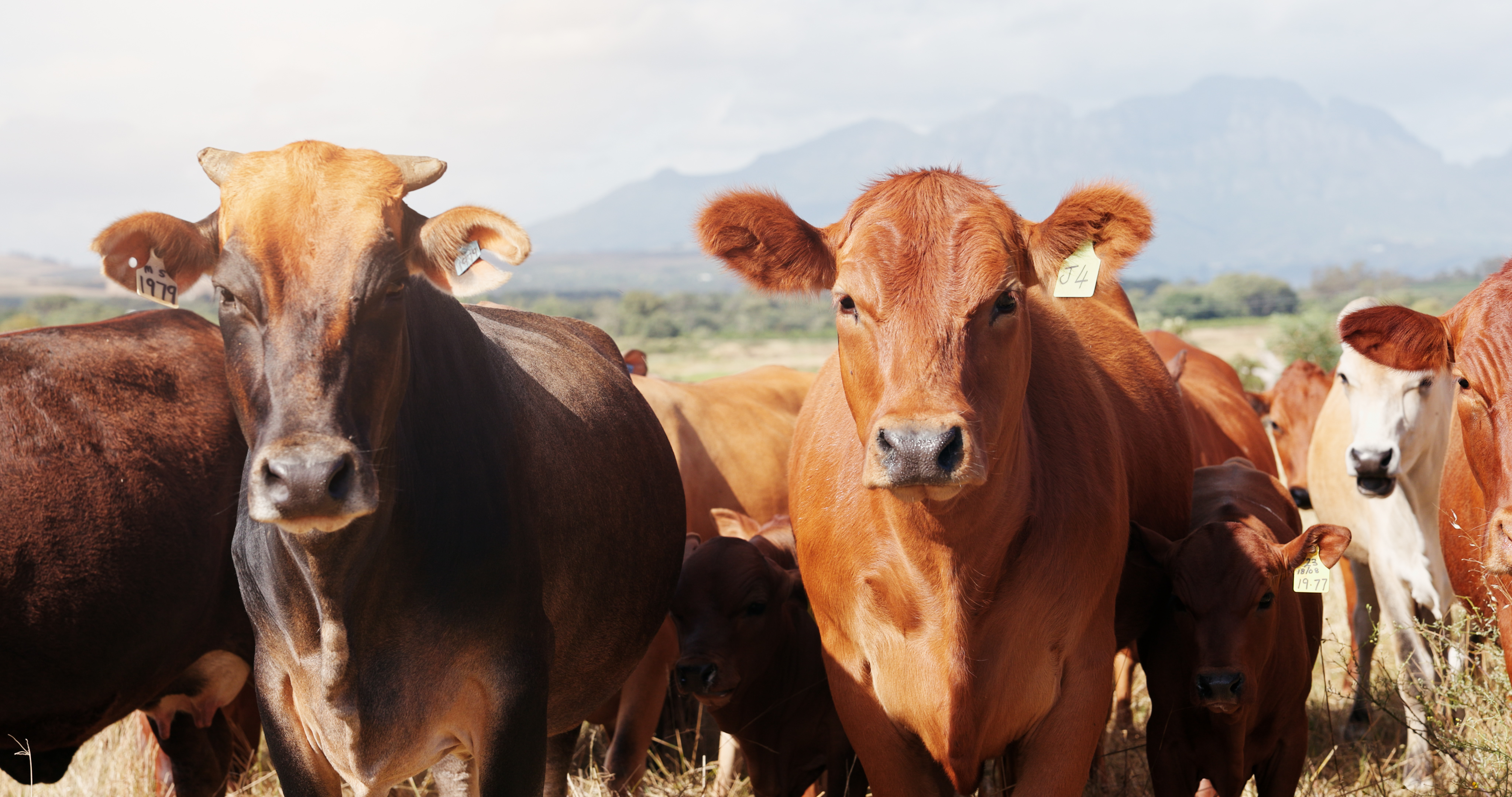
Experts explored Trypanosomiasis-Resistant Cows, which introduce natural disease resistance variants into high-yield breeds, and Surrogate Sire technology, a novel method to accelerate the spread of elite genetics.
- Trypanosomiasis-Resistant KO Cow: This application uses CRISPR-Cas9 to introduce naturally occurring genetic variants for resistance to trypanosomiasis, a major disease in tropical regions, into high-yield dairy breeds such as Holstein. These variants were identified in native African cattle breeds and are precisely inserted into the genome of dairy cattle, aiming to combine high productivity with environmental resilience.
- Surrogate Sire (NANOS2 KO): This is a two-step technology. First, CRISPR-Cas9 is used to knock out the NANOS2 gene in a bull, rendering it sterile because its testes cannot produce their own germ cells. Second, spermatogonial stem cells (SSCs) from a genetically elite donor bull are transplanted into the sterile surrogate's testes. The surrogate then produces sperm possessing the genome of the elite donor, effectively serving as a biological factory for disseminating desirable genetics through natural mating or artificial insemination. This technology introduces the complex regulatory concept of a "null segregant," which is an offspring of a genetically modified organism that, through normal breeding, does not inherit the genetic modification itself.
Poultry (Consumer Needs and Animal Welfare)
Discussions focused on two applications in poultry that raise some of the most nuanced regulatory questions. The first, Allergen-reduced Chickens, uses gene editing to directly benefit consumers with egg allergies. The second, Single-Sex Chickens, uses a transgenic parent to produce a non-transgenic commercial animal (a null segregant) to solve a major animal welfare problem in the egg industry.
- Allergen-reduced Ovomucoid KO Chickens: This application uses the gene editing tool transcription activator-like effector nucleases (TALENs) to knock out the gene responsible for producing ovomucoid, a major allergen in egg whites. The goal is to produce eggs that are safe for consumption by individuals with egg allergies. This is a direct consumer benefit and food safety application.
- Single-Sex Transgenic Chickens (The Null Segregant Model): This technology addresses the widespread practice of culling male chicks in the layer (egg-producing) industry. A marker gene (e.g., for a fluorescent protein) is inserted into the Z chromosome of the parent breeding hens. Because male chickens are ZZ and females are ZW, only male offspring inherit this marked Z chromosome. This allows male-destined eggs to be identified and removed before incubation begins. The female chicks that hatch to become egg-laying hens do not inherit the marker gene and are therefore "null segregants,” the offspring of a GMO that are not themselves genetically modified.
Navigating the Regulatory Maze
The workshop highlighted a significant challenge: the lack of consistent global governance. While many countries distinguish between "knockouts" (which add no foreign DNA) and "transgenics," the data requirements for approval vary widely.
- Safety First: Participants generally agreed that many gene-edited applications, particularly those without foreign DNA, present no unique food safety hazards.
- Animal Welfare: Ongoing monitoring of gene-edited animals was emphasized to ensure that traits like increased muscle mass or induced sterility do not negatively impact the animals' well-being.
- Trade Hurdles: Divergent regulations across trading partners could lead to market disruptions, necessitating robust traceability and stewardship programs led by the industry.
Looking Ahead
The IWRAAAAB 2025 workshop concluded with a call for a better global harmonization of regulatory criteria. By developing practical monitoring protocols and proportionate data requirements, the scientific community and policymakers aim to foster innovation while ensuring the safety and sustainability of our global food supply. As the world looks toward ISBR 2027 in Bali, Indonesia, the conversations started in Ghent will remain vital to the responsible development and deployment of animal biotechnologies.
IWRAAAAB 2025 was supported by the US Department of Agriculture. For more information, the contents and recordings of the IWRAAAAB 2025 and previous workshops can be found on the Animal Biotechnology Resources page of the International Service for the Acquisition of Agri-biotech Applications (ISAAA Inc.) website.
| Newer Post | Archive | Older Post |
Science Speaks is ISAAA Inc.'s official blog. Weekly blog articles, authored by ISAAA writers, partners, and invited contributors, aim to help share, disseminate, and promote scientific knowledge and its vital role in achieving global agricultural sustainability and development. Your support to Science Speaks will help us achieve this goal. You can help us by donating as little as $10.