|
||||
![]() |
||||
|
||||
NewsGlobal[Top]
The World Economic Forum (WEF), an independent international organization, has mapped out an action agenda in a report Putting the new vision for agriculture into action: A transformation is happening to help national leaders to accelerate and expand collaboration on both global and country levels. The report was prepared by the WEF New Vision for Agriculture Initiative in collaboration with McKinsey and Company. Specifically, the report was developed "in response to the growing global demand for a set of concrete actions global and regional stakeholders can take to achieve the goals of the New Vision: to simultaneously advance economic growth, global food security and environmental sustainability through market-based approaches." The New Vision for Agriculture sets goals of 20 percent improvement per decade on each of its three goals: economic growth and opportunity, food security and nutrition, and environmental sustainability. The Initiative is lead by 26 global partner companies. Download a copy of the report at http://www3.weforum.org/docs/WEF_FB_NewVisionAgriculture_HappeningTransformation_Report_2012.pdf [ Send to a Friend | Rate this Article ] [Top]
How to improve durum wheat is the main agenda of researchers from Australia, Italy, and Germany who will meet at the Australian Centre for Plant Functional Genomics (ACPFG) in Adelaide. Durum wheat is a hard wheat used to make pasta. "Durum wheat is a less reliable crop for Australian and Italian farmers than bread wheat," said Professor Peter Langridge, from ACPFG. "But there's plenty of scope for improving durum with new breeding technologies, because it hasn't been studied as thoroughly as bread wheat." A white paper on the collaboration plan was earlier drafted by scientists from the durum working group. This group is part of the G20's International Research Initiative for Wheat Improvement. For more information, visit http://www.acpfg.com.au/uploads/documents/news/DurumWorkshop.pdf. Africa[Top]
Africa Rice Center (AfricaRice) announced a 10-year strategic plan for reaching the goal of having 90 percent self-sufficiency of Africa in rice by 2020. According to AfricaRice Director General Dr. Papa Abdoulaye Seck, the plan shows that developing the rice sector can be a driver for economic growth across the continent. If successful, AfricaRice projects the following outputs:
The plan is linked with the Millennium Development Goals, vision and objectives of the Comprehensive Africa Agriculture Development Programme (CAADP) and the system-level outcomes of the CGIAR Consortium of International Agricultural Research Centers. Read more at http://www.africarice.org/warda/newsrel-strategic-plan-feb12.asp. [ Send to a Friend | Rate this Article ] [Top]
AfricaBio, a non-profit biotechnology stakeholders association, announced the appointment of Dr. Nompumelelo H. Obokoh as its new Chief Executive Officer. Prior to her new appointment, Dr. Obokoh was the head of the African Agricultural Technology Foundation (AATF) West Africa Office. Dr. Obokoh is a renowned plant molecular biologist with a PhD degree from the University of Cambridge, MSc degree in Plant Biotech, and BSc degrees in Microbiology and Biochemistry. She has many achievements in the field of crop biotechnology such as receiving the Rothamsted International African Fellowship to identify molecular markers in drought tolerant cowpea mutant lines. Read AfricaBio's media release at http://www.africabio.com//pages/posts/africabio-appoints-new-ceo135.php. Americas[Top]
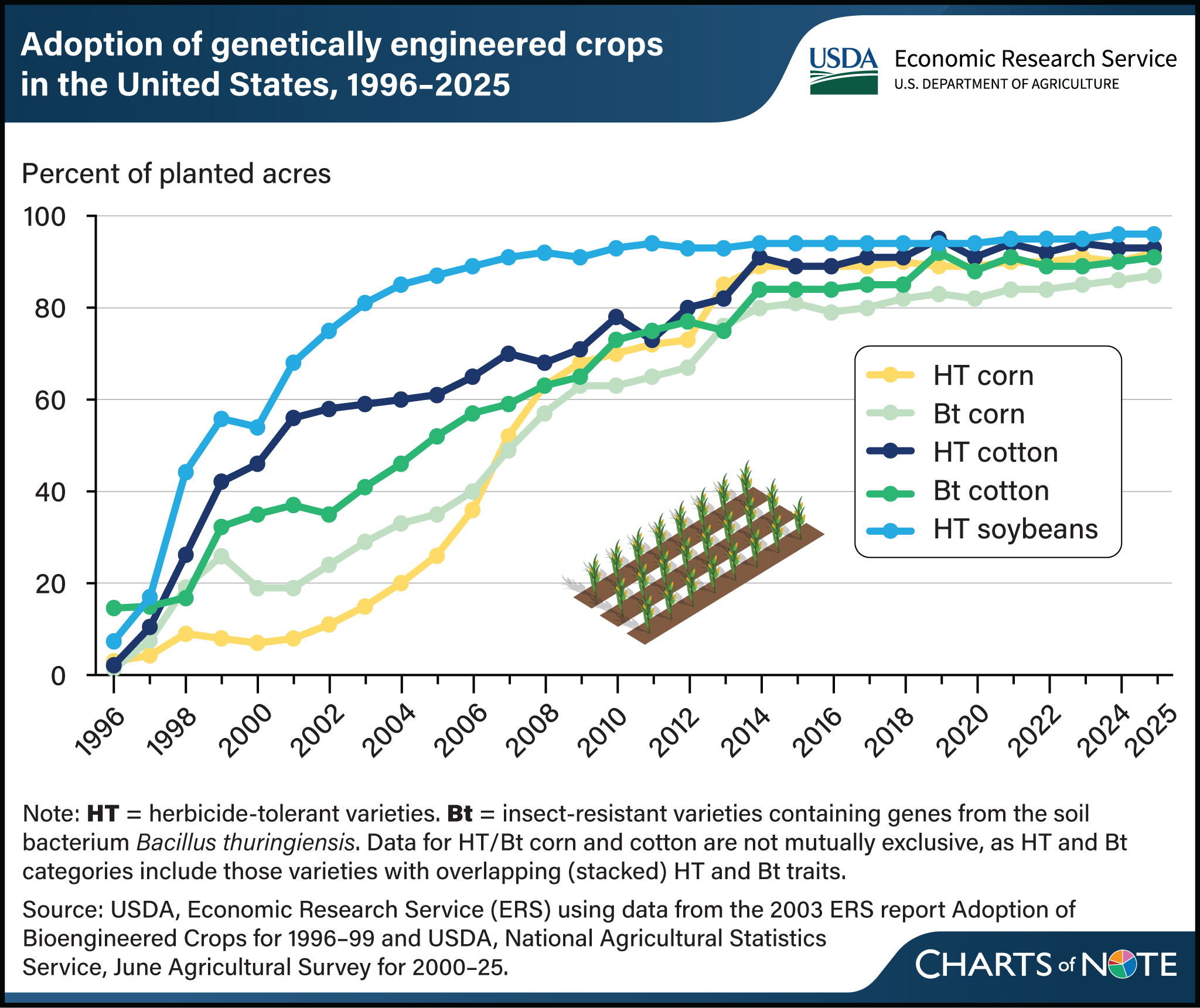
The Brazilian government forecasts crop area to expand from 62 million hectares in 2010/11 to 68 million hectares by 2020/21. Highest growth in area is expected for soybean and sugarcane. The production boom is partly a result of the rapid adoption of biotech seed varieties. According to Celeres Consulting, biotech soybeans accounts for 83 percent of planted area while biotech corn now occupies 65 percent of total area. Brazil is expected to produce more of the key commodities than the U.S. by registering an average growth of nearly 27 percent (compared to 8 percent for the U.S.). Brazil's share of world agricultural exports in 2010 is estimated at 9 percent. up from 5 percent a decade earlier. In contrast, market share of exporting nations such as the U.S., Canada, the European Union, and Australia, have deceased in the last 10 years. More information is available at http://www.fas.usda.gov/info/IATR/012412_Brazil/. [ Send to a Friend | Rate this Article ] [Top]
Bayer CropScience has received registration from the U.S Environmental Protection Agency (EPA) for its TwinLink technology for cotton. This new technology combines insect resistance against lepidopteran pests and tolerance to glufosinate-ammonium herbicide. Upon commercialization, TwinLink will be available as a stack with GlyTol, Bayer's glyphosate tolerance technology. Bayer anticipates that the first cotton varieties with TwinLink and GlyTol stacked traits will be out in the U.S. by 2013, pending other regulatory approvals in key import countries. At present, TwinLink has been approved in Australia/New Zealand, Brazil, Canada, and the US. Additional regulatory approvals are pending globally. Read more at http://www.bayer.com/en/news-detail.aspx?newsid=15650. [ Send to a Friend | Rate this Article ] [Top]
Scientists at the U.S. Department of Agriculture (USDA) and partners discovered a single gene that could confer resistance to three important diseases namely, southern corn leaf blight, northern leaf blight, and gray leaf spot. These diseases have been problems of corn producers globally because of its common symptom of forming lesions on leaves. Plant geneticist Peter Balint-Kurti and colleagues examined 300 corn varieties from different parts of the world and found no variety that exhibit complete resistance to the three diseases. However, they observed that each variety has different severity of symptoms for the diseases. The team conducted a statistical analysis called association mapping to search for parts of the genome that could be linked with variation in disease resistance. They observed that some resistance genes conferred resistance to two or more different diseases. They also found a gene that seemed to confer multiple disease resistance. This gene is called glutathione S-tranferase (GST), which is a member of a family of genes known for their functions in regulating oxidative stress and in detoxifications. Read the media release at http://www.ars.usda.gov/is/pr/2012/120201.htm. Their study was also published in the Proceedings of the National Academy of Sciences (PNAS): http://www.pnas.org/gca?allch=&submit=Go&gca=pnas;108/18/7339. [ Send to a Friend | Rate this Article ] [Top]
Pioneer Hi-Bred announced the release of 17 new hybrids of corn in the 96- to 116-day comparative maturities (CRMs) for drought-stressed environments, thus helping growers match the right hybrid with the right acre. Last year, they released eight Optimum AQUAmax hybrids which yielded an average of 7.1 percent higher in drought conditions and 3.4 percent higher in favorable weather conditions compared with other commercially-available corn hybrids. According to Pioneer, the newly released products would also exhibit the same benefits. Drought tolerance is controlled by multiple genes and can be affected by environmental conditions, thus, the new products have several modes of action to provide maximum performance. Read more about the new products at http://www.pioneer.com/home/site/about/news-media/news-releases/template.CONTENT/guid.ACE7C612-E701-BDAC-F795-7BC0FD016E24. Asia and the Pacific[Top]
Malaysian Science and Technology Information Centre (MASTIC) has recently launched the national reference center for science, technology, and innovation (STI) which is known as Knowledge Resource Science and Technology Excellence, Malaysia (KRSTE.my). This knowledge database system was first developed by using local expertise and semantic technologies in the country and can be accessed freely. It is an interactive, integrated system that stores and displays data on STI from universities, government agencies, research institutes, and industry players. With 11 knowledge domains including biotechnology, agriculture, biodiversity, sea to space, business and economics, engineering science, ICT, industry, medical, S&T, and social science, it establishes a central collection point for data and also reduces complexity through standardized definitions and data feeds, while ensuring data integrity and streamlining processes. "In today's knowledge worker environment, the need to share and leverage knowledge and insight is critical to success," said Datuk Fadillah Yusof, the Deputy Minister of Science, Technology, Science and Innovation during its launch on November 29, 2011. "KRSTE.my coincides with the government's aspiration to utilize STI as the key driver in enhancing our ability to acquire and use knowledge to promote innovation," he added. Those involved in making decisions and formulating policies for educational groups will view KRSTE.my as a useful tool. It will provide them data and input on how to seek funding and formulate strategic direction for educational and R&D programs. In addition, the valuable information from KRSTE.my will enable them to formulate policies aligned with the national agenda. For more details about the science reference center, email Shamira Shamsuddin of the Malaysian Biotechnology Information Center at shamira@bic.org.my. [ Send to a Friend | Rate this Article ] [Top]
Researchers at the Australian Centre for Plant Functional Genomics (ACPFG) say that field trials of genetically modified barley have had positive results. The first year trials at Corrigin, Western Australia are testing the potential of salt-tolerant varieties. ACPFG researcher Stuart Roy said that in low salt areas, GM barley yielded 20 to 30 per cent higher than non-GM barley. In salty areas, yields were up 50 to 70 per cent more grains per plant. View the article at http://sl.farmonline.com.au/news/nationalrural/grains-and-cropping/barley/gm-barley-trial-success/2430826.aspx The ACPFG's central node is at the Waite Campus of the University of Adelaide with research nodes at the Universities of South Australia, Queensland, and Melbourne. Europe[Top]
The United Kingdom Climate Change Risk Assessment (CCRA) reviewed the evidence for over 700 potential impacts of climate change in a UK context. It published its findings on January 25, 2012, the first assessment of its kind in the UK and the first in a 5-year cycle. Detailed analysis was made of over 100 of these impacts across 11 key sectors based on their likelihood, the scale of their potential consequences and the urgency with which action may be needed to address them. The online version of the assessment contains the CCRA UK government report, summary of the key findings, and 2012 evidence report, among others. The evidence report provides information to policy makers on the risks and opportunities from climate change in 5 themes: Agriculture and Forestry; Business, Industry and Services; Health and Well-being; Buildings and Infrastructure; Natural Environment. Download the assessment information at [ Send to a Friend | Rate this Article ] [Top]
Scientist Ralph Bock from the Max Planck Institute of Molecular Plant Physiology discovered that a transfer of entire chloroplasts or parts of their genomes can occur between plants that are in close proximity. The new chloroplast genome can even be handed down to the next generation and thus give plant new characteristics. The transfer of genes without sexual reproduction is called horizontal gene transfer (HGT) which was believed to be exhibited only by prokaryotes. In the previous study of Bock and colleagues, they discovered that HGT was possible in plants of the same species. However, in their latest experiment, they discovered further that sexually incompatible species could also exhibit HGT. "As of now, we do not know how chloroplasts manage to get from one cell to the other," said Bock. "But the decisive point is that it happens and the discovery of this process offers a new explanation for important evolutionary processes and opens up new possibilities for plant breeders." Read the complete article at http://www-en.mpimp-golm.mpg.de/pdf/pm/PM-2012-01-31E.pdf. [ Send to a Friend | Rate this Article ] [Top]
John Innes Center scientist, Dr. Simon Griffiths, received research funds amounting to about £500,000 from the European Commission to seek ways by which wheat can be adapted to survive climate change. The project will focus on flowering time and investigate how differences could be used to produce crops adapted to future effects of climate change. Flowering time is a significant determinant in overall crop yield. It is affected by the crops' genetic makeup as well as the environmental conditions. Therefore, Griffiths' project Adaptawheat aims to examine how genetic differences in wheat could contribute to alterations in flowering time and other developmental processes, and evaluate its effects in overall yield. Genetic, developmental, and yield differences will be assessed in wheat planted on different locations in Europe and other continents, which have varying climate conditions. Read the original article at http://news.jic.ac.uk/2012/01/adaptawheat/. Know more about Adaptawheat at http://ec.europa.eu/research/bioeconomy/agriculture/projects/adaptawheat_en.htm. [ Send to a Friend | Rate this Article ] [Top]
Purple sprouting broccoli Santee developed by Bejo Zagen, Netherlands, has been nominated for the Fruit Logistica Innovation Award 2012. Santee has high content of naturally occurring glucosinolates, which are organic compounds associated with reduced risk of cancer. Several tests have proven that Santee could produce high levels of glucosinolates in different seasons and climates, compared with conventional green broccoli varieties. Read the original article in German at http://www.agf.nl/nieuwsbericht_detail.asp?id=79666. The other nominees are posted at http://www.fruitlogistica.de/en/PressService/PressReleases/index.jsp?lang=en&id=154624. Winning technology will be announced on February 10, 2012, during the trade fair of Fruit Logistica in Berlin, Germany. Research[Top]
The progress of breeding drought tolerant maize has been slow because drought tolerance is controlled by many genes. Thus, breeders have been using secondary traits and selection indices to find the best genotype under drought stress. Xavier Mhike of Makere University in Uganda, together with other scientists, conducted a study to assess the reliability of certain selection indices and secondary traits and how they related to the conventional parameters to improve selection efficiency under stress environments. The research team formed and evaluated fifty maize hybrids using alpha lattice planting design under favorable and drought conditions. Results showed that under drought conditions, the general combining ability (GCA) was highly significant for grain yield, anthesis-silking interval (ASI) and ears per plant (EPP). Specific combining ability (SCA) was significant for grain yield and EPP. Stress tolerance index (STI) and geometric productivity index (GMP) had positive and significant relationship with grain yield under drought and favorable conditions. Based on these findings, secondary traits ASI and EPP, as well as selection indices like STI and GMP are effective in identifying high yielding genotypes under different conditions. Read more about this study at http://www.academicjournals.org/ajps/PDF/Pdf2012/27%20January/Mhike%20et%20al.pdf. [ Send to a Friend | Rate this Article ] [Top]
Camelina (Camelina sativa L.) is a member of the mustard family that has recently gained interest from researchers because of its high seed oil content with low input requirements. However, just like other crops in the mustard family, it is also highly sensitive to residues of inhibitor herbicides. Thus, Dustin Walsh of Washington State University and colleagues conducted a study to select and characterize camelina mutant plants with increased resistance to acetolactate synthase (ALS) inhibitor herbicides. Walsh and team developed mutant seeds by soaking them in a mutagenic compound. The seeds were then planted and screened for resistance to herbicides imazethapyr and sulfosulfuron. Five lines exhibited resistance, and four of which looked the same and showed resistance to imazethapyr. The other line showed resistance to sulfosulfuron. All five lines appears to be controlled by a single co-dominant gene. Further analyses confirmed the mutant plants' improved resistance to herbicides. When the lines were compared with the wild type, it was discovered that significantly higher doses of herbicides are needed by the mutant lines to reduce plant growth by half. Through sequence analysis of the ALS genes from the sulfosulfuron resistant line, eight different genes were identified and one was found to be linked with the highest level of resistance through amino acid shift, which has been previously exhibited in yeast and tobacco ALS inhibitor resistance. Subscribers of Molecular Breeding may get a copy of the research paper at http://www.springerlink.com/content/g1347w06t1557447/fulltext.pdf. [ Send to a Friend | Rate this Article ] [Top]
Proanthocyanins (PAs) are major compounds present in seed coats, leaves, fruits, flowers, and bark of many plant species. The building blocks of PAs are catechnin and epicatechin, which are antioxidants with several benefits on human health. PAs in forage plants can also help reduce the chances of lethal pasture bloat in ruminants. However, many forage legumes like alfalfa have limited concentrations of PAs. Jerome Verdier from Samuel Roberts Noble Foundation and a team of researchers used reverse genetics to characterize more than 30 seed-induced transcription factors (TFs) in model legume Medicago truncatula. One of the TFs, MtPAR, was found to regulate genes involved in PA biosynthesis. Ectopic expression of the gene in transformed hairy roots led to PA production and build up. Thus, this TF could be used to increase PAs in forage legumes to reduce pasture bloat in ruminants. Read the abstract at http://www.pnas.org/content/109/5/1766.abstract. Beyond Crop Biotech[Top]
Salmonella strains are notorious for contaminating food and water causing over a billion illnesses and about 500,000 deaths per year globally. Dr. Arthur Thompson and colleagues at the Institute of Food Research (IFR) in the UK mapped the transcriptional start sites (TSSs) where the genes responsible for invasion of cells are switched on and read from. Their study aims to elucidate how to control the virulence of Salmonella. Furthermore, the researchers found many RNA molecules that are not made into proteins, which are relevant in controlling the expression of genes involved in making Salmonella pathogenic. Fore more details, read the media release and the research article at http://www.ifr.ac.uk/info/news-and-events/NewsReleases/120120salmonellatranscriptome.html and http://www.biomedcentral.com/1471-2164/13/25/abstract, respectively. [ Send to a Friend | Rate this Article ] [Top]
Scientists at Purdue University are studying the next generation of insecticides for disease-carrying insects. The results of their study could help other researchers who are working on human health, veterinary, and crop production sectors. According to researchers Catherine Hill and Val Watts, vector insects, or insects that carry and transmit infectious pathogens or parasites to other living organisms, are developing resistance to insecticides. They are now looking into key molecules in involved in feeding using genomic approaches. "Targeting these receptors leads either to killing the insect or stopping it from feeding, which is how pathogens and parasites are spread," Hill said. Since they are focused on the DNA of the vector insects, insecticides developed through this precise method could be safer for humans and non-target organisms, and also less impact on the environment. Read more about this study at http://www.purdue.edu/newsroom/research_park_foundation/2012/120130HillWattsInsecticide.html. [ Send to a Friend | Rate this Article ] [Top]
An international team of researchers have sequenced the molecular structure of a protein called restriction enzymes, which is present in many types of bacteria. These molecules control how fast can bacteria acquire resistance to drugs and eventually develop as superbugs. The researchers, which include experts from the University of Edinburgh, Universities of Leeds and Portsmouth, focused on Escherichia coli but their findings are also applicable in many other pathogenic bacteria. When bacteria are exposed to antibiotics for long periods of time, they have the tendency to become resistant to drugs. They become resistant to drugs by absorbing DNA from other pathogens that would enable them to block the action of the drugs. Restriction enzymes could slow down or speed up this process. The researchers were also able to make a model of the enzyme's ability to disable the DNA from another organism, while protecting the bacteria's own genetic material. The ability of restriction enzyme to break genetic material is widely used by scientists in genetic engineering. "We have known for some time that these enzymes are very effective in protecting bacteria from attack by other species. Now we have painted a picture of how this occurs, which should prove to be a valuable insight in tackling the spread of antibiotic-resistant superbugs," said Dr. David Dryden of University Edinburg, who was also the leader of the study. Read the news release at http://www.bbsrc.ac.uk/news/health/2012/120131-pr-protein-study-superbugs.aspx. [ Send to a Friend | Rate this Article ] [Top]
A new method in yellow biotechnology or insect biotechnology has been employed by scientists in Max Planck Institute for Chemical Ecology, Germany. Ian Baldwin and colleagues study the gene function in moth larvae by manipulating genes using RNA interference technology (RNAi) and plants. They feed the larvae with plants that have been treated with viral vectors to induce silencing of genes. This new method is called plant virus based dsRNA producing system (VDPS). "We were impressed by the high specificity of these RNAi experiments...This means that there was no collateral damage from the procedure: the gene silencing worked on only one targeted gene," said Baldwin. Visit http://www.ice.mpg.de/ext/881.html for more details. Announcements[Top]
The International Conference for GM Crops has been moved from November 20-23, 2011 to March 5, 2012 to be held at Cairo University in Egypt. ICGMC aims to provide an international forum to discuss the current role of GM crops and stimulate researchers, industry and government professionals to address challenges of agriculture in Egypt. For more details about the registration, visit http://www.icgmc2011.com/. [ Send to a Friend | Rate this Article ] [Top]
The GMSAFOOD Conference on the theme GMOs safety and post market monitoring will be held on March 6-8, 2012 at the Medical University of Vienna, Austria. It will aim at the state-of-the-art approaches to post market monitoring and evaluating the safety of GMOs. The GMSAFOOD consortium, funded by the European Commission, is a collaboration of researchers from Austria, Ireland, Norway, Hungry, Turkey and Australia. To register (open until February 28, 2012), go to http://www.gmsafoodproject.eu/Register.aspx?IdEvent=12. [ Send to a Friend | Rate this Article ] [Top]
The 12th International Stymposium on Biosafety onf Genetically Modified Organisms (ISBGMO12) will be held on September 16-20, 2012 at the Donald Danforth Plant Science Center in St. Louis,Missouri, USA. It will aim to provide an opportunity for scientists to discuss the conference theme "Considering Biosafety in the Application of Biotechnology to Meet the Changing Needs of Agriculture, Health, and The Environment." Details are available at http://www.isbgmo.com/ Document Reminders[Top]
The meeting report of the 10th Anniversary Transgenic Technologies (TT2011) is now published in the latest issue of Transgenic Research. The meeting held in St. Pete Beach, Florida, USA, on October 24-26, 2011 was organized by the International Society for Transgenic Technologies (ISTT). Based on the report, several important issues and advances on biotechnology were discussed in the meeting. Get a copy of the report at http://www.springerlink.com/content/j0250l100v2t2468/. |
||||