

Africa-based Biotech and Biosafety Information Portal Launched
| |
Africa has taken a major step toward strengthening access to credible biotechnology and biosafety information following the launch of a continental digital portal designed to make regulatory data easier to find, understand, and use.
The portal, dubbed the Biotech Africa Database platform, provides country-specific information on biotech crop approval decisions and summaries of key regulatory requirements for import, export, and transit of biotech products. It also offers, at a glance, a guide to application processes for the movement of biotech products across borders.
The platform, launched during a live webinar attended by 120 participants from 29 countries, was developed by the International Service for the Acquisition of Agri-biotech Applications (ISAAA AfriCenter) in collaboration with its partners. The Biotech Africa portal is expected to support informed decision-making, regulatory transparency, regional learning and the responsible deployment of agricultural biotechnology across the continent.
For many years, Africa-related biotechnology and biosafety information has been scattered across multiple agency websites, gazette notices, and regulatory documents, making it difficult for users to access and interpret. This has often created delays, compliance risks, and uncertainty for traders, regulators, and value-chain actors operating across borders. The Biotech Africa platform seeks to address this challenge by consolidating accurate, up-to-date information on biosafety regulations, approval decisions, and regulatory processes in one place.
The platform is particularly useful for traders, regulators, researchers, and other stakeholders who require quick and reliable access to regulatory approval decisions and biosafety information.
Speaking during the launch, ISAAA AfriCenter Director Dr. Margaret Karembu described the development as a monumental step in leveraging digital data for regulatory decision-making in Africa.
“Today we have opened a door where data replaces rumors, where a farmer in Kampala (Uganda) sees the same biotech information as a researcher in Kaduna (Nigeria), as a trader in Johannesburg (South Africa) and as a policy maker in Addis Ababa (Ethiopia),” said Dr. Karembu.
She said data sharing would help farmers and other stakeholders understand the progress being made across the continent. She noted that Africa’s agroecological mapping has shown that some regions share similar conditions, making it important to share data to avoid unnecessary delays and accelerate progress.
Dr. Paul Chege, a senior program officer at ISAAA AfriCenter, said the Biotech Africa portal will support regional learning, informed decision-making, regulatory transparency, and responsible deployment of biotechnology.
“For traders, it offers faster access to requirements for better planning. For regulators, the portal offers transparent reference points for peer-to-peer learning or risk assessment and compliance checks, and for researchers, it provides up-to-date country-level information to support regulatory planning for biotech crops research and development,” he remarked.
Dr. Andre van der Vyver, Executive Director of the South African Cereals and Oilseeds Trade Association (SACOTA), applauded ISAAA AfriCenter and its partners for developing the portal. He said the biotechnology and biosafety information available on the platform is timely for traders, as it will help them comply with regulations governing the handling of biotechnology products.
Seventy-three (73) countries are currently cultivating or trading in biotech crops. By 2024, over 20 biotech crops were cultivated in 31 countries, with the global area planted to GM crops reaching 218.71 million hectares. An additional 29 countries are importing biotech products or crops for food, feed, and processing.
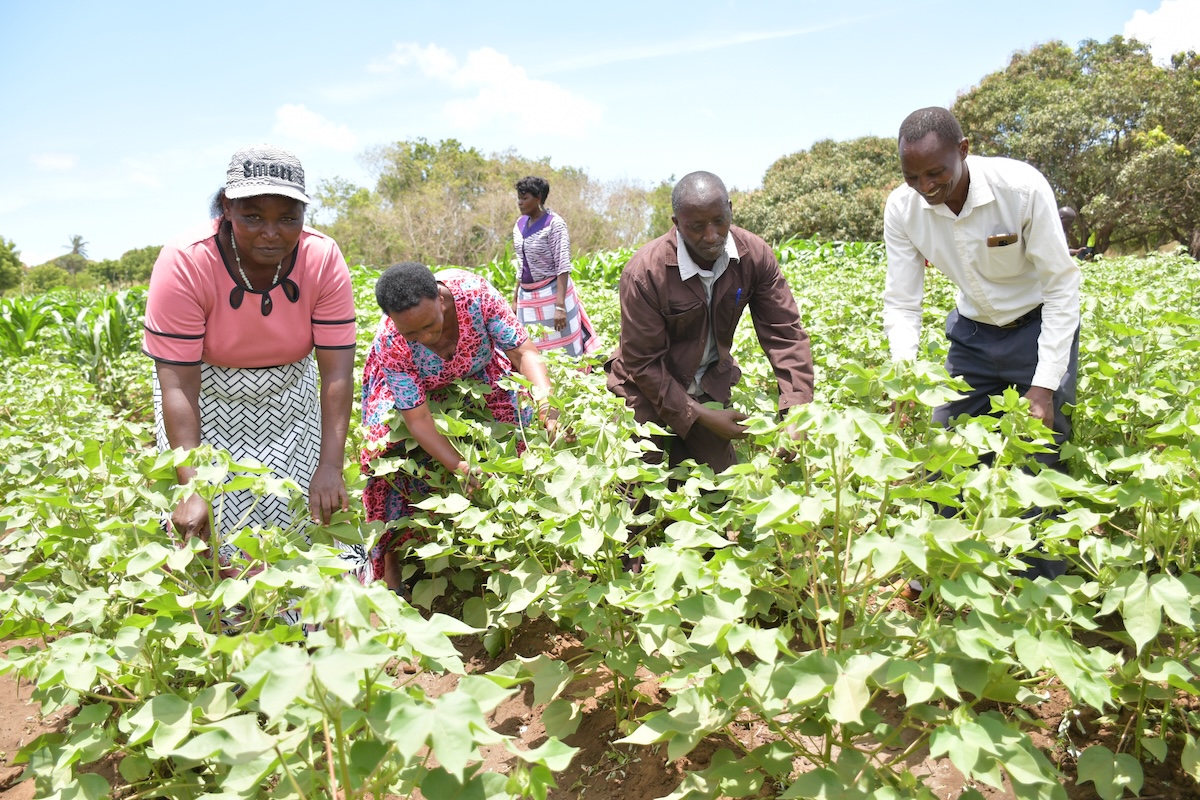
In Africa, six biotech crops have been approved for cultivation in 10 countries – South Africa, Sudan, Malawi, Ethiopia, Kenya, Nigeria, Eswatini, Ghana, Burkina Faso and Rwanda. The approved biotech crops are cassava, cotton, cowpea, maize, potato, and soybean. The continent currently cultivates about 3.98 million hectares of biotech crops, representing close to 2% of the global biotech crop hectarage.
Biotechnology has played a crucial role in alleviating poverty and improving the lives of more than 17 million small-scale farmers in developing countries. By contributing to higher yields and reducing dependence on costly chemical inputs, biotech crops have helped farmers, their families, and communities build more stable and resilient livelihoods.
For more information about the Biotech Africa Database portal, contact Dr. Margaret Karembu at mkarembu@isaaa.org
| Newer Post | Archive | Older Post |
Science Speaks is ISAAA Inc.'s official blog. Weekly blog articles, authored by ISAAA writers, partners, and invited contributors, aim to help share, disseminate, and promote scientific knowledge and its vital role in achieving global agricultural sustainability and development. Your support to Science Speaks will help us achieve this goal. You can help us by donating as little as $10.