CRISPR Boosts Maize Resistance to Southern Corn Rust |
|
|
|
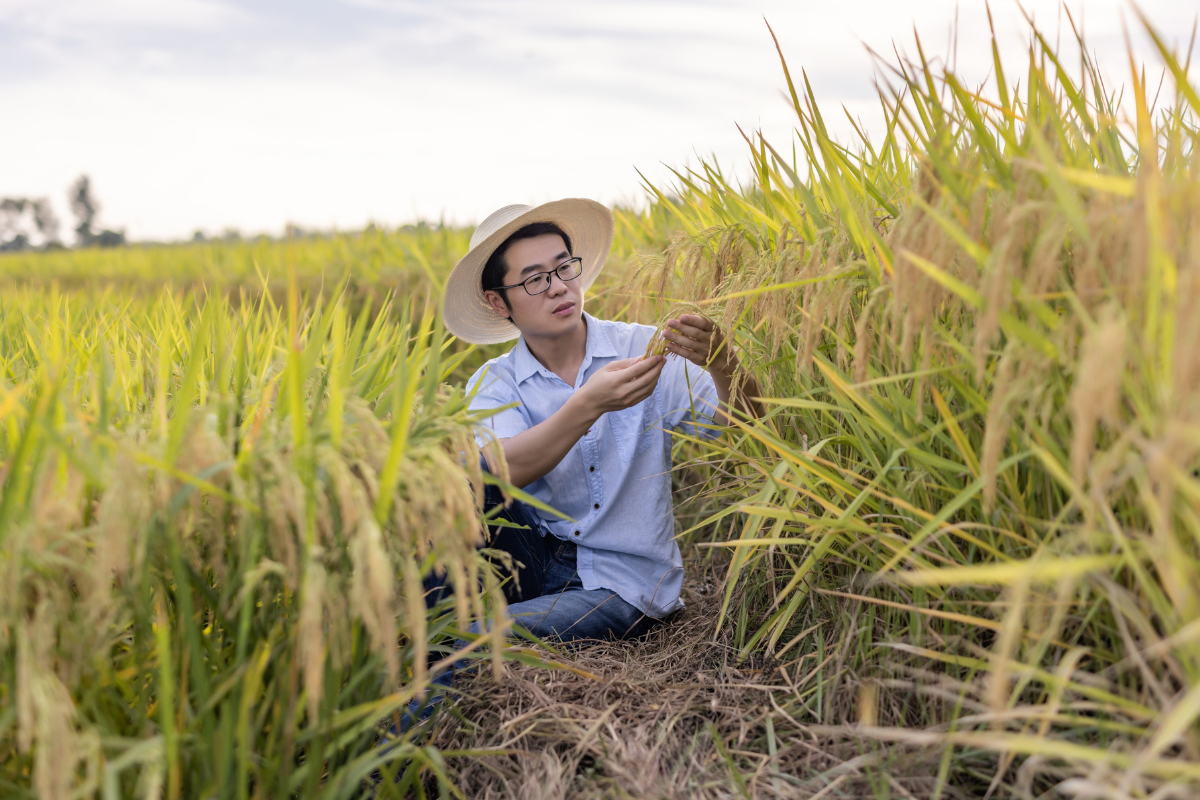
Researchers from Jilin Academy of Agricultural Sciences and partners have investigated the role of ZmJAZ12 in maize resistance to southern corn rust (SCR). Caused by the fungus Puccinia polysora, SCR is a major disease that can reduce maize yields worldwide. The study reveals significant insights into how ZmJAZ12 influences the plant's defense responses and its potential for use in maize breeding.
|
|
|
|
|
Korean Rice Cultivar Gains Glufosinate Resistance Through Prime Editing |
|
|
|
Scientists in South Korea have used prime editing to introduce herbicide tolerance into "Dongjin," a popular native rice cultivar. By precisely modifying the OsGS1;1 gene without retaining foreign transgenes, the researchers demonstrated a new genetic strategy to tackle major weed-control challenges in direct-seeded rice. The framework reveals significant insights into how high-precision gene editing can streamline weed management and highlights its potential for precise, transgene-free crop breeding.
|
|
|
|
|
OsMYBR17 Improves Rice Tolerance to Heat Stress |
|
|
|
Extreme heat presents a major threat to global rice crops, reducing yields and threatening food supplies as temperatures rise. To combat this issue, scientists are searching for natural mechanisms that help rice plants survive scorching conditions. Researchers at Hangzhou Normal University in China and partners identified a gene called OsMYBR17 that acts like a master switch, turning on when rice plants experience heat stress and activating the plant's internal protection systems.
|
|
|
|
|
Anthropic's AI Claude Discovers Novel Enzyme System with CRISPR-Like Repeats |
|
|
|
Anthropic has announced that its AI assistant, Claude, autonomously discovered a novel enzyme system with CRISPR-like traits. Operating with only high-level instructions, a fleet of roughly 950 Claude agents analyzed vast DNA sequence databases over 21 hours. The AI successfully identified an uncharacterized bacterial immune mechanism now named array-associated reverse transcriptase (ART), which features distinct repeating DNA patterns alongside reverse transcriptase enzymes.
|
|
|
|
|
| Research and Tools |
 |
|
|
|
|
|
| Biotech Updates is a weekly newsletter of ISAAA, a not-for-profit organization. It is distributed for free to over 22,000 subscribers worldwide to inform them about the key developments in biosciences, especially in biotechnology. Your support will help us in our mission to feed the world with knowledge. You can help by donating as little as $10. |
|
|
|
|