CROP BIOTECH UPDATE
---------------------------------------------------------------------------
A weekly summary of world developments in agri-biotech for developing countries, produced by the Global Knowledge Center on Crop Biotechnology, International Service for the Acquisition of Agri-biotech Applications SEAsiaCenter (ISAAA)
---------------------------------------------------------------------------
July 24, 2009
In This Week’s Issue:
News
Global
• FAO: Food Prices Still High in Poor Countries
• Biotechnology Research in the CGIAR
Africa
• USDA Identifies Factors that Stalled Biotech Crop Commercialization in Egypt
• African Women in Agricultural Research and Development Fellows
• Biotech Information Core Facility in Nigeria
Americas
• USDA, DOE Award USD 6.3 M for Functional Genomics and Bioenergy Research
• Canada and the Netherlands Sign Canola Research Pact
• Researchers Develop Microchip that can Measure Real-Time Water Stress
• Dow, Monsanto Get U.S., Canadian Nods for SmartStax
Asia and the Pacific
• ASFARNET - Philippines Declares Commitment to Support Agri-Biotechnology
• Bangladesh Science Minister: Strengthen Biotech Research
• Bayer and CSIRO Team up on Wheat Research
• Devgen and Sang Hyang Seri Enter Hybrid Rice Collaboration
Europe
• EFSA’s Opinions on Monsanto and Syngenta’s GM Maize Applications
• Coordination and Cooperation in Early Adoption of GM Crops in Germany
• EuropaBio's Green Biotech Manifesto
Research
• Silencing a Gene can Make Tomatoes Sweeter
• GM Rice to Combat Iron Deficiency
• Researchers Publish Cucumber Genetic Map
Announcements
• Young Researchers Seminar in Montpellier, France
• Regional Young Women Scientists Symposium in Malaysia
• TWAS Regional Young Scientific Conference on Food, Health and Fuel: Plants for the Future
Document Reminders
• Literature Review on U.S. Soybean Production Systems
• ISAAA Brief 40 Available Online
----
NEWS
----
Global
FAO: FOOD PRICES STILL HIGH IN POOR COUNTRIES
Prices of staple foods in developing countries remain high despite a fall in international prices, making life harder for millions of poor people, according to the United Nations Food and Agriculture Organization (FAO). FAO in its latest Crop Prospects and Food Situation report said that the world cereals output is expected to fall 3.4 percent to 2.209 billion tons this year.
In 27 sub-Saharan Africa countries, FAO found that 80 to 90 percent of all cereal prices remain more than 25 percent higher than before the food price crisis two years ago. In Sudan for instance, the prices of sorghum recorded last month were three times higher than two years ago. The prices of maize in Ethiopia, Kenya and Uganda, on the other hand, have doubled compared to two years ago.
FAO listed reduced harvests, higher or delayed imports, civil conflict, strong demand in neighboring countries and regional trade flows, as the reasons for the high food prices. The UN agency further said that prospects for 2009 cereal crops is uncertain in parts of Western and Eastern Africa as well as in Asia because of an erratic start of the rainy season.
Read FAO's media release at http://www.fao.org/news/story/en/item/28797/icode/
The Consultative Group on International Agricultural Research (CGIAR), a strategic alliance of members, partners, and 15 international agricultural research centers that mobilizes science to benefit the poor, is "committed to developing and releasing safe and beneficial products of agriculture, making use of all available knowledge and technologies, including modern biotechnology". This is the conclusion of Haruko Okusu, CGIAR Science Council Secretariat, in an article Biotechnology Research in the CGIAR: An Overview published in AgBioForum.
Okusu notes that current issues and changes in agriculture and food security have changed the landscape for research opportunities for the CGIAR. The article provides a synopsis of current biotech-related activities conducted in the CGIAR Centers. It also suggests what the CGIAR's role(s) might be in ensuring the safe and responsible use of biotechnology for conducting agricultural research that responds to the needs of developing countries.
View the full article at http://www.agbioforum.org/v12n1/v12n1a07-okusu.htm
Several factors that include politics, lack of institutional development, and mistakes on the commercial side, have caused the delay in commercial planting approval for Mon 810 in Egypt. According to a USDA-Foreign Agricultural Service (FAS) GAIN report, though Egypt has relatively advanced research and development in biotechnology applications, the general public awareness about the technology is still very limited.
Egyptian government leaders and policy makers recognize the importance of biotechnology as a tool for national and global development and have yet to create a national legislation on biotech. Several ministries control policy decisions in the country. The Ministries of Health, Agriculture, and Higher Education and Scientific Research control almost all food policy decisions while the Ministries of Foreign Trade and Industry, Supply and Home Trade, and Finance control the flow of food imports and exports through Egypt. The report narrates several USDA supported projects that will help Egypt establish a competent regulatory authority and to set a system for practical biotechnology applications.
For more details, the USDA-FAS GAIN Report Number EG9012 is available at http://gain.fas.usda.gov/Recent%20GAIN%20Publications/Biotechnology_Cairo_Egypt_7-15-2009.pdf
Beatrice Akello of the National Agricultural Research Organization (Uganda), Patience Chipungu ofChancellor College (Malawi), and Pamela Akin-Idowu of National Horticultural Research Institute (Nigeria) are a few of the winners of the prestigious African Women in Agricultural and Development (AWARD) Fellowships. The three ladies will pursue higher learning in the biological sciences/biotechnology.
A total of 61 women scientists from nearly 500 applicants in different fields of specialization will receive the innovative AWARD Fellowship designed to boost the female talent pool for African agriculture. The women scientists are expected to strengthen their expertise as pro-poor researchers and become leaders in their respective specializations. AWARD is supported by the Bill & Melinda Gates Foundation and United States Agency for International Development.
For more information about AWARD, go to http://fellowsupdate.wordpress.com/
Nigerian Minister of Science and Technology Al-Hassan Bako Zaku launched the Biotechnology Information Core Facility (BCIF) at the University of Ibadan, Nigeria on 9th July 2009. The facility is a component of the National Biotechnology Development Agency (NABDA) - Southwest Zonal Biotechnology Center. "Ministries and the universities should collaborate and work together to harness the resources available for the growth of the nation," said the Minister. He assured the Center of adequate funding, in line with the Federal Government's determination to bring back research culture in the university system.
Receiving the Minister in his office, the Vice-Chancellor of the University of Ibadan, Professor Olufemi Bamiro, lauded the government for building the center in the nation's premier university. He described the NABDA initiative as a welcomed development for healthy partnership with the University and assured the Minister of the University's commitment and support to the Center. The coordinator of the NABDA-Southwest Biotechnology Center and Deputy Director Oyekanmi Nash informed the Minister that the facility will provide the template for capacity-building (in bioinformatics education, training, research and development) and will be linked to the network of Biotechnology Information Centers (BICs) of the International Service for the Acquisition of Agri-biotech Applications (ISAAA).
Also present was NABDA Director-General and Chief Executive Officer Bamidele Solomon, who assured that the BCIF and other core facilities being set-up by the agency would go a long way in helping to strengthen scientific research in the country.
For more information, contact Dr. Oyekanmi Nash, Deputy-Director (Collaboration & Linkages), National Biotechnology Development Agency, FMST at oyekan.nash@gmail.com
The United States Department of Agriculture (USDA) and Department of Energy (DOE) have a total of $6.3 million to fund projects that will accelerate plant breeding programs and improve biomass feedstocks for biofuel production. The USDA and DOE said that these projects will hopefully provide the scientific foundation to facilitate the use of lignocellulosic materials for bioenergy and biofuels. Since lignocellulosic crop plants are less intensive to produce and can grow on poorer quality land, competition with crops grown for food production is avoided.
"Part of the solution to the energy problem will be home-grown energy crops," DOE Secretary Steven Chu said. "These projects will help us unlock the true potential of advanced biofuels, decrease our dependence on foreign oil, and create new jobs and a thriving biofuels industry in America."
The award recipients include:
For more information, read http://genomicsgtl.energy.gov/research/DOEUSDA/DOEUSDA0709pressrelease.pdf
Canada's National Research Council (NRC) announced that it is collaborating with the Center for BioSystems Genomics in the Netherlands to launch three agricultural research and development projects on canola. The first research project will focus on the genetics of lipid metabolism in canola to boost the plant's nutritional value. Scientists from the two research institutes will then work together to study seed quality and vigor to improve crop yield and the crop's quality. The last research project will try to better understand the signaling pathways that are involved in the formation of haploid embryos. Better understanding of these pathways will help plant breeders to improve their breeding process.
"This collaboration with the Netherlands will contribute to new knowledge that will benefit one of Canada's most important resources," said NRC president Pierre Coulombe. Canada is the world's second largest canola producer, after China. Canola is estimated to contribute more than $14 billion annually to the Canadian economy.
The press release is available at http://www.nrc-cnrc.gc.ca/eng/news/nrc/2009/07/20/crop-production.html
Researchers at the Cornell University's nanofabrication laboratory said they have developed a microsensor capable of measuring real-time water stress in living plants. The device may prove to be a necessity for farmers and plant growers, especially for vintners since drought and overwatering can severely diminish the quality of wine grapes.
The device, composed of a slab of hydrogel with nanometer-scale pores, acts as a synthetic tree that mimics the flow of water inside plants. The team hopes to design a sensor that will transmit field readings wirelessly to a central server; the data will then be summarized online for the grower. They have also begun the development of a multi-use sensor that redirects water flow inside the plant through a shunt. In this case, the sensor could measure the flow of water and mineral nutrients through the plant, in addition to water stress.
This multi-use sensor could be implanted throughout all trees in a forest ecosystem to measure water use and nutrient flow on a large scale with unprecedented accuracy.
Read the original story at http://www.news.cornell.edu/stories/July09/plantWaterStress.html
The 2010 commercial launch of SmartStax, the world's first ever eight-gene corn stack, is now set after it has received registration from the U.S. Environmental Protection Agency (EPA) and regulatory authorization from the Canadian Food Inspection Agency (CFIA). SmartStax, the product of a 2007 collaborative agreement between Monsanto Co. and Dow Chemical Co., is said to feature a combination of insect control traits that significantly reduces the risk of resistance for both above- and below-ground pests. It combines Dow's Herculex 1 technology with Monsanto's VT Pro for protection against the corn earworm, European corn borer, southwestern corn borer, sugar cane borer and fall armyworm. Below ground insect protection against Western, Northern, and Mexican corn rootworm is accomplished through the combination of Monsanto's Yield Guard VT with Dow's Herculex. The maize variety is also tolerant to the Roundup and LibertyLink herbicides.
View the press release at http://monsanto.mediaroom.com/index.php?s=43&item=729
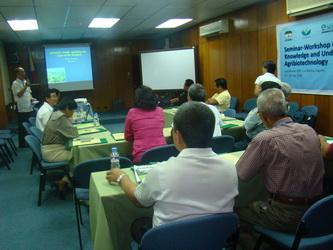
The Asian Farmer's Network (ASFARNET) - Philippines made a resounding declaration supporting the utilization of biotechnology for food, feed and fiber security. Members and officers of the network signed the declaration during their organizational meeting and biotechnology workshop held last July 22-23 in Los Baños, Laguna, Philippines. The declaration states that biotechnology offers solutions in alleviating agricultural production problems and biotech crops and products have undergone extensive food, feed and environmental safety assessment prior to commercialization, thus are considered to be safe for consumption and cultivation. The network supports "farmers' choice" in the adoption of new technologies and products; involvement in biotechnology awareness building initiatives from different sectors; and continuous conduct of scientist-farmer discussions on agri-biotechnology.
Representative farmers from the three major islands Luzon, Visayas and Mindanao, shared their first-hand experiences in planting biotech corn in their own farms. All of them concurred on the positive impact that technology has provided and would like to share the benefits of the technology to other farmers.
Conceived in 2003, ASFARNET-Philippines is composed of farmer-leaders and key stakeholders from 15 regions of the country. Most of the members of ASFARNET- Philippines are adoptors of biotech corn since 2003, and are actively involved in advocating the use of the technology. About 100,000 small-scale Filipino farmers planted biotech corn in more than 350,000 hectares in 2008.
For more information on the updates of agri-biotechnology in the Philippines, visit http://www.bic.searca.org or email bic@agri.searca.org
Biotechnologists should be inspired by the spirit of serving the country and the people at the grassroots level. This was the call of Bangladesh Science and Information and Communication Technology Minister Yeafesh Osman during the Biotech Round Table Conference on Present Status of Biotechnology and its Possible Solution in Dhaka last July 15, 2009. He said that biotech research should be strengthened to attain food sufficiency in the country. Over 100 participants from various government research organizations and universities attended the workshop which aimed to discuss potentials for biotechnology in Bangladesh.
For more information about crop biotech developments in Bangladesh, email Dr. Khondoker Nasiruddin at nasirbiotech@yahoo.com.
Germany-based Bayer CropScience and the Commonwealth Scientific and Industrial Research Organization (CSIRO), Australia's national research organization, announced that they will work together to develop wheat varieties with higher yield, more efficient nutrient utilization and tolerance against abiotic stress such as drought. One of the initial projects of this collaboration is dedicated to the development of wheat lines with improved yield potential and stress tolerance, while another focuses on wheat lines with improved utilization of phosphorus. These and other research projects are expected to result in new varieties available to farmers from 2015 onwards. Financial details of the collaboration were not disclosed.
Bayer and CSIRO have previously collaborated on several projects, including improvement of fiber quality in cotton and development of a gene silencing technology.
The media release is available at http://www.press.bayercropscience.com/bcsweb/cropprotection.nsf/id/EN_20090721?open&l=EN&ccm=500020
Belgium-based crop technology company Devgen and Sang Hyang Seri, an agrochemical company wholly owned by the Indonesian government, announced that they have signed an agreement to create a business unit for hybrid rice seed production. The business unit is a contractual venture that will be jointly managed by the companies. Sang Hyang Seri (SHS) will provide local expertise, land and infrastructure and Devgen will provide the hybrid rice production technology. Produced seeds will be distributed by SHS and Devgen within Indonesia.
SHS currently produces and supplies around 100,000 tons of certified rice seed (close to one third of the Indonesia's rice seed requirements). SHS President Eddy Budiono said: "With this cooperation we will, as per government guidance, provide the Indonesian farmer with the best, locally produced hybrid rice to increase yield and productivity in the country. The result will be significantly realized in the next few years."
Read the press release at http://www.devgen.com/press_detail.php?id=1329839
The scientific panel on genetically modified organisms of the European Food Safety Authority (EFSA) has released its opinion on the use of MIR604, Syngenta's insect-resistant maize, for food and feed use in the European Union. The maize has been genetically modified to produce the mCry3A protein, which confers resistance to the western corn rootworm (Diabrotica virgifera virgifera) and other related coleopteran pests of maize. EFSA said that the GM maize is "as safe as its conventional counterpart with respect to its potential effects on human and animal health or the environment."
The EU food watchdog made the same conclusion on Monsanto's genetically modified maize hybrid. The GM maize was produced by crosses between maize inbred lines containing MON 88017 and MON 810 events to combine resistance to certain coleopteran and lepidopteran pests and to confer tolerance to glyphosate. Mon 88017 produces a modified Cry3Bb1 protein for insect resistance and a CP4 EPSPS protein for herbicide tolerance. MON810, on the other hand, expresses a Cry1Ab protein. These proteins have been assessed previously by EFSA and no safety concerns were identified. EFSA said that interactions between the single events that might impact food and feed safety are not likely to occur.
EFSA's scientific assessment included molecular characterization of the DNA insert, monitoring of agronomic traits and evaluation of the transgenic protein and whole food/feeds in terms of toxicity, allergenicity and nutritional value.
EFSA's scientific documents are available at http://www.efsa.europa.eu/EFSA/efsa_locale-1178620753812_1211902691146.htm and http://www.efsa.europa.eu/EFSA/efsa_locale-1178620753812_1211902691168.htm
Inter-farm coordination or cooperation with adjacent farmers in Germany is not necessary to achieve coexistence. Large farms chose intra-farm coordination to manage the construction of buffer zones within their own fields and to avoid the planting of Bt maize close to their neighbors. These were some of the conclusions on The Role of Coordination and Cooperation in Early Adoption of GM Crops: The Case of Bt Maize in Brandenburg, Germany by Nicola Consmüller, Volker Beckmann, and Christian Schleyer of the Humboldt-Universität zu Berlin.
The German regulatory framework has moderate ex-ante regulations and strict ex-post liability rules to protect conventional and organic farming from possible economic damages caused by transgenic plants and to ensure coexistence. These regulations, however, impose additional costs on those farmers who intend to plant Bt maize. The case study noted that costs arising from ex-ante regulations and ex-post liability were not considered very important for Bt maize farmers.
See the AgbioForum article at http://www.agbioforum.org/v12n1/v12n1a05-consmuller.htm
Researchers at the University of Newcastle in Australia and the Chinese Academy of Sciences have made a major advance by identifying a gene in tomato that could increase crop seed yield, fruit quality, and lengthen shelf life. The gene, INVINH1, plays a role in limiting the amount of sugar delivered to each part of the plant and if prevented from expressing itself, more sugar (glucose and fructose) could be delivered to specific parts of the plants including seeds and fruits.
INVINH1 encodes a protein that inhibits the activity of invertase, the enzyme that catalyzes the breakdown of sucrose into glucose and fructose. Invertase plays a linchpin role in plant development and in biotic and abiotic stress response, since glucose and fructose are important signaling molecules and essential substrates for energy generation.
The researchers observed that silencing the expression of INVINH1 in tomato, via RNA interference, led to a prolonged leaf life span, by blocking abscisic acid-induced senescence, and an increase in seed weight and fruit hexose level which is achieved through enhanced sucrose hydrolysis.
The paper published by the Plant Cell is available for download at http://dx.doi.org/10.1105/tpc.108.063719
Researchers at the Swiss Federal Institute of Technology (ETH) in Zurich have developed rice plants that contain six times more iron in polished rice kernels. The high-iron rice may prove to be important in fighting iron-deficiency, particularly in developing nations in Asia and Africa where rice is the main caloric source. More than two billion people, or almost 30 percent of the world's population, suffer from iron deficiency, according to the World Health Organization. Consequences of iron malnutrition include anemia, poor mental development and depressed immune system.
The high-iron rice plants express two genes to produce the enzyme nicotianamin synthase, which mobilizes iron, and the protein ferritin, which stores iron. According to the researchers, the synergistic action of these proteins allows the rice plant to absorb more iron from the soil and store it in the rice kernel. Rice naturally has a lot of iron, but only in the seed coat. In countries with tropical or sub-tropical climates, however, the seed coat has to be removed for storage.
"Agronomic evaluation of the high-iron rice lines did not reveal a yield penalty or significant changes in agronomic traits, except for a tendency to earlier flowering," wrote Wilhelm Gruissem, a scientist at ETH Zurich's Department of Biology, and colleagues in a paper published by the Plant Biotechnology Journal.
Read the original story at http://www.ethlife.ethz.ch/archive_articles/090717_Eisen_Reis_MM/index_EN The full scientific paper is available to subscribers at http://dx.doi.org/10.1111/j.1467-7652.2009.00430.x
A team of researchers from the Chinese Academy of Agricultural Sciences, the China Agricultural University and the United States Department of Agriculture's Agricultural Research Service (ARS) has produced the world's first integrated genetic and cytogenetic map of the cucumber genome, an important resource for scientists working to develop improved cucurbit crops.
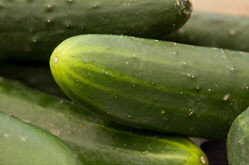
"This map will facilitate whole genome sequencing and positional cloning, enhance marker assisted selection (MAS), and provide opportunities to investigate synteny among cucurbit species," wrote Sanwen Huang, a researcher at the Institute of Vegetables and Flowers of the Chinese Academy of Agricultural Sciences, and his colleagues in a paper published by PLoS One.
Cucumbers belong to the family Cucurbitaceae, which also includes important vegetable and fruit crops such as melon, watermelon, pumpkin and squash. Despite their commercial importance, however, there are few genomic tools available for cucurbits.
Continue reading the article at http://www.isaaa.org/kc/cropbiotechupdate/researchfeatures/default.html#
Researchers_Publish_Cucumber_Genetic_Map.htm
The French Initiative for International Agricultural Research (FI4IAR) is organizing its first biennial seminar for young researchers working in developed and developing countries. Entitled Exploring Agricultural Research for the Future: a dialogue between young researchers from the South and the North, the event will provide an opportunity for doctoral and postdoctoral students to dialogue and to establish links between young researchers from the North and the South. The event will take place during the Global Conference on Agricultural Research for Development (GCARD) scheduled for 28 March-1 April 2010.
For more information, visit http://www.inra.fr/gip_ifrai_eng/manifestations/seminaire_jeunes_chercheurs_du_nord_et_du_sud_mars_
avril_2010_montpellier_france
The TWAS Regional Young Scientific Conference on Food, Health and Fuel: Plants for the Future will be held on the 2nd to 5th of November 2009 in Kuala Lumpur, Malaysia. The key themes of the conference include Fuel Security: biofuels technology and development, alternative feedstock such as Jatropha, micro algae, ligno-cellulosic materials; and Food Security: plant breeding, propagation and micropropagation, food quality, post harvest, functional food, medicinal plants for food supplements, increasing productivity and yields. Scientists in the Asia-Pacific Region are invited to attend.
Registration and Paper submission can be viewed at http://www.frim.gov.my/twas/main.html
The Council for Agricultural Science and Technology has released a comprehensive literature review that evaluates U.S. soybean production systems currently in use with respect to their environmental and economic sustainability. It documents the ecological and economic implications of U.S. soybean production in conventional, transgenic (biotech), and organic production systems. Sustainability of U.S. Soybean Production: Conventional, Transgenic, and Organic Systems defines sustainable agriculture and evaluates its implications in the production of U.S. soybeans.
Visit http://www.cast-science.org for more information.
The International Service for the Acquisition of Agri-biotech Applications (ISAAA) has released Brief 40 on Communicating Crop Biotechnology: Stories from Stakeholders. It documents how various stakeholders have benefited from science communication efforts and how in turn, they are now part of the process of realizing a collective voice on crop biotechnology. Stories from stakeholders in 14 countries in Africa (Burkina Faso, Egypt, Ghana, Kenya, and Uganda) and Asia (Bangladesh, China, India, Indonesia, Malaysia, Pakistan, Philippines, Thailand, and Vietnam) as well as the global community show that despite the differences in culture, language, and geographical locations, they have similar experiences, face common problems, and share a hope for themselves and their family.
Stories are complemented by discussions on communication strategies that were implemented and specific activities that stakeholders participated in or use to better understand the technology. These personal accounts unfolded distinct patterns of experiences, perceptions, and behavior but converged to form a common thread to show the impact of knowledge sharing initiatives.

Download the Brief at http://www.isaaa.org/resources/publications/briefs/40/ or download the document by sections (Introduction, Farmers, Media, Decision Makers, Academics & Scientists, Religious Sector, Other Partners, Global Community, Appendix)