CROP BIOTECH UPDATE
---------------------------------------------------------------------------
A weekly summary of world developments in agri-biotech for developing countries, produced by the Global Knowledge Center on Crop Biotechnology, International Service for the Acquisition of Agri-biotech Applications SEAsiaCenter (ISAAA)
---------------------------------------------------------------------------
October 9, 2009
In This Week’s Issue:
News
Global
• Need for More Investment in Agriculture Says FAO
• Nobel Honors Works on Telomeres and Ribosome
• Climate Change and Impact on Food Security
• Importance of Predicting Flowering Time and Crop Yield in Future Climates
• Desertification and Climate Change
Africa
• Partnership to Strengthen Parliamentary Action to Support Agric Development
Americas
• USDA Joins FDA Efforts to Develop New Food Safety Regulations
• USDA Awards $11 M for Applied Plant Genomics Research and Extension
• Maui Council Approves GM Taro Ban
• Productive Corn Plants with the Right Resources
• Genuity SmartStax Trial Plots Demonstrate Efficacy Against Corn Earworm
• Genome Prairie Projects Granted Provincial Funding
Asia and the Pacific
• Socioeconomic Impacts of Biotech Crops in Philippines and Indonesia
• New Pulse Varieties to Boost Growers' Options
• GM Cotton Yield Comparing Well Against Commercial Varieties
• Japan Commits USD 25 million to International Rice Research
Europe
• EFSA and NGOs Meet to Discuss GMOs
• Researchers Receive USD 1.6 million to Study Honeybee Decline
• Low Impact of GM Over Conventional Maize
• Growing Greener Greens
• New Plant Genomics Portal Expected to Support Research Into Improved Crops
Research
• From Teosinte to Maize, An Evolutionary Farce?
• Expression of Wheat Genes in Maize Kernels Improves Wet Milling Yields
Announcements
• National Seminar on Enzyme Biotechnology in Indonesia
Document Reminders
• ISAAA's Tribute to Dr. Norman Borlaug
• Vietnam GMO Biosafety Management Decree for Comment
• Millions Fed: Proven Successes in Agricultural Development, A new IFPRI Book
----
NEWS
----
Global
NEED FOR MORE INVESTMENT IN AGRICULTURE SAYS FAO
Global agricultural production must grow by 70 percent by 2050 to feed an additional 2.3 billion people. To address this concern, more public investment in research and development, widespread adoption of new technologies, farming techniques and crop varieties are needed. This viewpoint was forwarded in a paper The Technology Challenge by the Food and Agriculture Organization (FAO) prepared for the High-Level Expert Forum on How to Feed the World in 2050 in Rome, Italy. FAO mentions the following areas where efforts can be sustained:
- Improving efficiency in farmers' use of agricultural inputs
- Developing improved crop varieties
- Heavily investing in agricultural research and development
- Closing existing "yield gaps"
The FAO Forum is a preliminary meeting for the World Summit on Food Security on November 16-18, 2009.
See the FAO press release at http://www.fao.org/news/story/en/item/35686/icode/
NOBEL HONORS WORKS ON TELOMERES AND RIBOSOME
Three scientists from the United States, Elizabeth H. Blackburn, Carol W. Greider and Jack W. Szostak, won the 2009 Nobel Prize for Physiology or Medicine for their discovery "of how chromosomes are protected by telomeres and the enzyme telomerase." Blackburn and colleagues solved a fundamental problem in cell division: how chromosomes are copied faithfully during the process and how they are protected from degradation. Telomeres are regions at the end of chromosomes that prevent DNA strands from unraveling. They are akin to the plastic tips at the end of shoelaces. The scientists showed that cells age if the telomeres are shortened. They also discovered an enzyme, which they called telomerase, that allows for replacement of telomeres. The discovery of telomerase has stimulated the development of new therapeutic strategies to combat cancer and inherited diseases caused by defective telomerase like aplastic anemia.
The Nobel Prize Committee in a press release noted that "the discoveries by Blackburn, Greider and Szostak have added a new dimension to our understanding of the cell, shed light on disease mechanisms, and stimulated the development of potential new therapies."
The Nobel Prize Committee at the Karolinska Institute has also announced the 2009 prize for chemistry. The award went to Americans Venkatraman Ramakrishnan and Thomas Steitz and Israeli Ada Yonath for their work on an atomic scale map of the ribosome, the cell's protein-making factory. Yonath produced the first X ray crystallographic images of the ribosome structure in the 1970s, a task the Nobel committee said was then considered impossible. Steitz and Ramakrishnan, on the other hand, worked to determine the atomic structures of the ribosome's 50S and 30S subunits.
"An understanding of the ribosome's innermost workings is important for a scientific understanding of life. This knowledge can be put to a practical and immediate use; many of today's antibiotics cure various diseases by blocking the function of bacterial ribosomes," the committee pointed out in a press release.
The press releases are available at http://nobelprize.org/nobel_prizes/medicine/laureates/2009/press.html and http://nobelprize.org/nobel_prizes/chemistry/laureates/2009/press.html
CLIMATE CHANGE AND IMPACT ON FOOD SECURITY
What are the consequences of climate change on food security? What are the estimated investments that would offset the negative consequences for human well-being? A report on Agricultural Adaptation to Climate Change in the Developing World: What will it Cost? published by the International Food Policy Research Institute (IFPRI) says that agriculture and human well-being will be negatively affected by climate change. "Aggressive agricultural productivity investments of US$7.1–7.3 billion are needed to raise calorie consumption enough to offset the negative impacts of climate change on the health and well-being of children," the report suggested.
Using crop growth models under simulated climate change, the report predicts, among others, that:
- In developing countries, climate change will cause yield declines for the most important crops. South Asia will be particularly hard hit.
- Climate change will have varying effects on irrigated yields across regions, but irrigated yields for all crops in South Asia will experience large declines.
- Climate change will result in additional price increases for the most important agricultural crops–rice, wheat, maize, and soybeans.
- Calorie availability in 2050 will not only be lower than in the no–climate-change scenario—it will actually decline relative to 2000 levels throughout the developing world.
Download the full report at http://www.ifpri.org/publication/climate-change-impact-agriculture-and-costs-adaptation
IMPORTANCE OF PREDICTING FLOWERING TIME AND CROP YIELD IN FUTURE CLIMATES
The timing of flowering is an important factor if plants are to produce seeds under various abiotic and biotic stresses. Thus predicting flowering time and maturity of crops in a changing climate especially during warmer temperatures has been identified by many researchers as a major challenge. But the effect of this high and so called supraoptimal temperatures and their interaction with photoperiod has not been examined thoroughly, said researchers at the University of Reading, UK. Specifically, P. Craufurd and T.R. Wheeler have identified the following knowledge gaps in this research area: - better representation of photoperiod sensitivity in future studies
- improved simulations of diversity of responses to temperature and photoperiod of crop genotypes
- data collection of past changes in phenology in cropping systems
- more observations and research on the effect of temperature and interactions with photoperiod on flowering pathway genes
- integration of molecular and whole-plant responses
The impacts of climate change on crop production will be significant. Studies to date suggest that warming temperatures are expected to shorten the development stages of crops that may result to reduced yield and also change their suitability for cultivation in certain geographical areas.
Subscribers can read the detailed discussion in the review paper published by the Journal of Experimental Biology at http://dx.doi.org/10.1093/jxp/erp196.
DESERTIFICATION AND CLIMATE CHANGE
Science-based methods to monitor and assess land degradation and a holistic approach focused on sustainable land management are needed to prevent desertification and to deal with climate change. This was raised during the Ninth Conference of the Parties (COP9) to the United Nations Convention on Combating Desertification (UNCCD) held on September 21 to October 2, 2009 in Buenos Aires, Argentina. The conference Understanding Desertification and Land Degradation Trends was organized by the Dryland Science for Development Consortium, in collaboration with the UNCCD Secretariat and its Committee on Science and Technology.
"We must help dryland populations cope with drought and curb land degradation now, if they are to have any hope of adapting to climate change in the coming decades," said Mahmoud Solh, director general of the International Center for Agricultural Research in the Dry Lands (ICARDA).
Eleven recommendations from the conference outline a "rigorous scientific framework for monitoring and assessment," which would tackle both social and ecological dimensions of desertification/land degradation and drought .
More information on the conference is available at http://www.cgiar.org/monthlystory/october2009.html
Africa
PARTNERSHIP TO STRENGTHEN PARLIAMENTARY ACTION TO SUPPORT AGRIC DEVELOPMENT
African parliamentarians will benefit from a new partnership aimed at helping them formulate and promote policies to help smallholder farmers make the transition from subsistence to market-oriented agriculture. The partnership between the Alliance for a Green Revolution in Africa (AGRA) and the Association of European Parliamentarians for Africa (AWEPA) specifically strengthen parliamentary committees overseeing agriculture and trade.
"There is nothing more fundamental to the success of democracy than people's access to food," said Dr. Akinwumi Adesina, AGRA's Vice President for Policy and Partnerships. "Africa cannot build democracy on empty stomachs and the best way to secure the right to food is for Africa to produce its own food."
In a press release, the organizations noted that the partnership "will foster greater debate on agriculture as an engine of pro-poor growth and support the capacity of parliamentary committees to engage on evidence-based policy dialogues, on how African countries can cope with major challenges." These challenges include: the effects of climate change on African agriculture; laws and practices biased against women in agriculture; and access of farmers to technology and markets.
In Europe, the AGRA-AWEPA partnership will encourage the EU donor community to meet their development aid commitments to Africa, particularly in agriculture.
The press release is available at http://www.agra-alliance.org/content/news/detail/1016
Americas
USDA JOINS FDA EFFORTS TO DEVELOP NEW FOOD SAFETY REGULATIONS
U.S. Department of Agriculture Marketing Service (AMS) – Fresh Products Branch chief Leanne Skelton will be joining the U.S. Food and Drug Administration (FDA) for six months to help develop food safety rules to improve, share and exchange produce safety "best practices' and ideas. "We are delighted that the FDA sought USDA's counsel and cooperation as they tackle the challenges of ensuring the safety and availability of fresh produce and healthy foods," said AMS Administrator Rayne Pegg.
USDA and FDA have been conducting farm tours around the country to collect information from the farmers. "It is vitally important for us to hear ideas, concerns, and experiences directly from local growers around the country as we develop rules to help protect the safety of fresh produce from the farm to the table," FDA Commissioner Margaret Hamburg said. This initiative is in support of the Obama Administration's call for "innovative and aggressive effort to strengthen protections against unsafe food and food-borne illness".
See the article at http://www.fda.gov/NewsEvents/Newsroom/PressAnnouncements/ucm185278.htm
USDA AWARDS $11 M FOR APPLIED PLANT GENOMICS RESEARCH AND EXTENSION
The U.S. Department of Agriculture's National Institute of Food and Agriculture ( USDA NIFA) through the USDA Under Secretary for Research, Education and Economics Rajiv Shah has announced the $11 million Coordinated Agricultural Project (CAP) awards to significantly advance research, education and extension in applied plant genomics. The CAP awards are endowments from the USDA for investment in improving human conditions. Shah further said that "these research dollars yield the best returns because we are focusing on the areas we know have a high likelihood for real impact."
Among the recipients of the award include the North Dakota State University for their research on legume genetics and genomics; and Michigan State University, East Lansing; the University of Minnesota, Minneapolis; and the University of California-Davis on advance research, education and extension in tomato, potato, barley and tree breeding programs.
Read the press release at http://www.usda.gov/wps/portal/!ut/p/_s.7_0_A/7_0_1OB?contentidonly=true&contentid=2009/10/0496.xml
MAUI COUNCIL APPROVES GM TARO BAN
A bill prohibiting the cultivation and field trials of genetically modified taro, in Maui, the second largest of the Hawaiian Islands, has received final approval last week from the Maui County Council, according to an article published by the Maui News. Members of the council voted 9-0 to approve the ban, believing that taro is a sacred plant and should be kept in its natural form.
The Maui News quoted Mayor Charmaine Tavares as saying that she would support the ban. "I support the intent of the bill and the protection of Hawaiian kalo (taro), which deserves our respect and acknowledgment for its ancestral ties to Native Hawaiians, our host culture," Tavares said.
Some scientists, however, expressed opposition to the ban. Harold Keyser, from the University of Hawaii's College of Tropical Agriculture and Human Resources in Maui County, asked for some way to conduct research on the crop, stressing that in one case research on taro has led to the replenishment of a taro crop that was lost in American Samoa.
Read the original article at http://www.mauinews.com/page/content.detail/id/524344.html
PRODUCTIVE CORN PLANTS WITH THE RIGHT RESOURCES
Increasing corn productivity may have to do with the crop's ability to respond to intense crowding and low nitrogen availability, said an article published in the online version of Agronomy Journal. The paper authored by Purdue University scientists led by agronomy professor Tony Vyn was conducted for three years involving 4,000 individual plants which were observed in detail from seedling emergence. The individual plants were exposed to three different plant densities and three different nitrogen rates.
Results showed that competition is enhanced at high plant densities, especially when nitrogen is limiting. Nitrogen like other nutrients becomes more essential at high plant densities. In addition, anthesis-to-silking interval is crucial in increasing final grain yield. If there is competition, plants will tend to shed pollen on time, but the emergence of the silk in the corn ear is delayed, resulting to low seed set and yield.
This research is important in the standpoint of the corn industry as they develop hybrids that can withstand high plant densities and limiting nitrogen.
View the news at http://www.purdue.edu/newsroom/research/2009/oct/091007VynCornresearch.html The full article can be downloaded at https://www.agronomy.org/publications/agronomy-journal/view/101-6/aj09-0082-pub.pdf
GENUITY SMARTSTAX TRIAL PLOTS DEMONSTRATE EFFICACY AGAINST CORN EARWORM
On going experimental field trials of genetically modified (GM) corn Genuity SmartStax has raised hopes for Midwest US corn farmers to combat earworm. The trial which involves a comparison of corn hybrids without in-plant earworm protection and the biotech corn was conducted in a trial plot with severe earworm pressure in the eastern part of Kansas.
The biotech corn Genuity SmartStax which carries traits for earworm protection as well as two herbicide-tolerance traits for improved weed control performed better and has less incidence of secondary infection by corn ear diseases. In addition, Chism Craig, Monsanto Technology Development representative, observed that when corn is planted late, it is more vulnerable to earworm migration from the South. This trial showed that the biotech corn withstood the heavy insect pressure brought by late planting.
The biotech corn is scheduled to be introduced in 2010 on 3 to 4 million acres in the USA.
See the press release for more details at http://monsanto.mediaroom.com/index.php?s=43&item=755
GENOME PRAIRIE PROJECTS GRANTED PROVINCIAL FUNDING
The University of Manitoba, Canada is the recipient of the Manitoba provincial grant of $375,000 for the Genome Prairie's Total Utilization of Flax Genomics (TUFGEN) and the $1.3 million investment in the Microbial Genomics for Biofuels and Co-Products from Biorefining Processes (MGB2). "Manitoba's contribution to these projects underlines its commitment to having our province emerge as a leader in alternative energy and agriculture research," said Jim Rondeau, Manitoba Minister of Science, Technology, Energy, and Mines (STEM).
The project will focus on research on agricultural feedstocks as a source of alternative energy, the reduction of product waste and maximizing plant use. Flax, which is an alternative feedstock will be studied extensively, its genome sequenced, and will be developed to be a dual purpose crop.
The project also involves researchers in microbiology, biochemistry, genomics, bioinformatics, proteomics and engineering from across Canada, the United States and New Zealand.
See the press release at http://www.newswire.ca/en/releases/archive/October2009/05/c3783.html
Asia and the Pacific
SOCIOECONOMIC IMPACTS OF BIOTECH CROPS IN PHILIPPINES AND INDONESIA
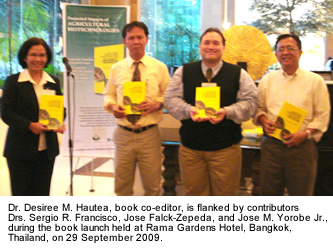
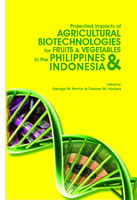 Substantial economic benefits are projected for research and development activities that have been undertaken to commercialize genetically modified products to solve major insect and disease problems in the Philippines and Indonesia. Bioengineered products such as transgenic papaya ringspot virus resistant papaya, insect resistant (Bt) eggplant, and multiple virus resistant (MVR) tomato in the Philippines, and late blight resistant potato, insect resistant (Bt) potato, and MVR tomato in Indonesia, are projected to earn high returns that justify the investments in their research and commercialization. These are forwarded in a book Projected Impacts of Agricultural Biotechnologies for Fruits and Vegetables in the Philippines and Indonesia, edited by Drs. George Norton and Desiree Hautea of the Virginia Polytechnic Institute and State University, USA and University of the Philippines Los Banos, respectively.
The book presents the projected level and distribution of costs and benefits associated with the featured biotech crops based from a series of ex-ante impact assessment studies supported by the Agricultural Biotechnology Support Project II (ABSPII) and the International Service for the Acquisition of Agri-biotech Applications (ISAAA). The book is co-published by ISAAA and the Southeast Asian Regional Center for Graduate Study and Research in Agriculture (SEARCA).
Inquiries about the book can be made by emailing isaaa-seasia@isaaa.org or jap@agri.searca.org. The e-copy of the book can be downloaded at http://www.isaaa.org/resources/publications/default.html#projectedimpacts2009
NEW PULSE VARIETIES TO BOOST GROWERS' OPTIONS
New varieties of legume – two lentils, a chickpea and a broad bean - will be introduced to Australian growers by the Pulse Breeding Australia (PBA). The varieties will be launched in association with its commercial seed partners at field days in New South Wales, South Australia and Victoria in October. Brochures related to the varieties' advantages, areas of adaptation, agronomic and disease management information and marketing arrangements will be available for each variety.
The pulses will have improved yield, harvestability, disease resistance, tolerance to abiotic stresses, quality and weed management. This initiative is a part of the Grains Research and Development Corporation (GRDC) to bring new and improved pulse varieties over a period of five years.
For details, see the news at http://www.grdc.com.au/director/events/mediareleases?item_id=2D82181EE4FCE4DCAE36E42E1D7CA6E0&pageNumber=1
GM COTTON YIELD COMPARING WELL AGAINST COMMERCIAL VARIETIES
Cotton trials at the Department of Agriculture and Food's research station near Kununurra are being harvested with yields comparing well against commercial crops elsewhere in Australia, Western Australia's Agriculture Department said in a press release. Penny Goldsmith, Department research officer, said a trial crop planted to commercial standards yielded 9.7 bales per hectare, slightly higher than the Australian average in 2007-08 of 9.3 bales per hectare. "Fifteen genetically modified cotton varieties were sown on the department's research station in April, all carrying the combination of genes which provides resistance to bollworm and budworm plus tolerance to Roundup herbicide," Goldsmith said.
According to Goldsmith, cotton cultivation on the Ord was abandoned in 1974 after key insect pests became uncontrollable. "New genetically modified varieties developed since then had resulted in adoption interstate," she said.
Western Australia's Department of Agriculture and Food said that 95 per cent of Australian cotton is genetically modified and most is exported.
The complete article is available at http://www.agric.wa.gov.au/PC_93631.html?s=1001
JAPAN COMMITS USD 25 MILLION TO INTERNATIONAL RICE RESEARCH
Japan has committed USD 20 million to boost efforts to develop drought-resistant and high-yielding rice varieties and an additional USD 5 million for extension training of African rice specialists, the International Rice Research Institute (IRRI) said in a press release. The funding will be provided to IRRI, the Africa Rice Center, and their national partners.
"Japan's decision to substantially increase support for international rice research is coming at a crucial time for global food security, especially in the face of major threats such as climate change," said Dr. Elizabeth Woods, the chair of the IRRI Board of Trustees. "We welcome Japan's decision to increase funding and look forward to working with our many research partners in Japan to ensure enough rice for all rice consumers everywhere."
Read the press release at http://beta.irri.org/news/index.php/press-releases/japan-commits-$25-million-to-international-rice-research.html
Europe
EFSA AND NGOS MEET TO DISCUSS GMOS
Five members of the European Union Food Safety Authority's (EFSA) GMO Panel and EFSA scientific officers met with non government organization representatives Helen Holder and Werner Mueller of Global 2000/Friends of the Earth, Austria and Janet Cotter of Greenpeace in Parma, Italy. The meeting was held to discuss genetically modified organisms (GMOs) as part of its commitment to hold a regular open dialog with concerned stakeholders.
EFSA Executive Director Catherine Geslain-Lanéelle welcomed all participants to the meeting and Per Bergman, the Head of the GMO unit presented EFSA's work on GMO risk assessment including actions arising from the December 2008 conclusions from the Environmental Council. The meeting focused on issues related to GM maize Mon810, GM rice (LLRice 62), as well as EFSA's review of long-term environmental risk assessment and environmental impacts of herbicide tolerant GM crops.
See the story at http://www.efsa.europa.eu/EFSA/efsa_locale-1178620753812_1211902922423.htm
RESEARCHERS RECEIVE USD 1.6 MILLION TO STUDY HONEYBEE DECLINE
United Kingdom's Biotechnology and Biological Sciences Research Council (BBSRC) and Syngenta have awarded scientists at Rothamsted Research and Warwick University £1 million (USD 1.6 million) to research the decline of honeybees. UK government figures suggest bee numbers have fallen by 10-15% over the last 2 years; the British Beekeepers' Association (BBKA) quotes a figure nearer 30% for 2008. But the cause of the decline remains an enigma.
The team, which will be headed by Juliet Osborne, will use a combination of field work and computer modeling to look at how the bees' behavior outside the hive, while looking for food, interacts with what is affecting bees in the hive – factors that have historically been studied separately. The ultimate aim of the project is to build a model that will allow us to understand how bees may respond to diseases in a changing farmed landscape.
Read more at http://www.rothamsted.ac.uk/Research/Centres/PressReleases.php?PRID=72
LOW IMPACT OF GM OVER CONVENTIONAL MAIZE
An environmental assessment study supported by the European Union to analyze the likely impact of GM corn over conventional corn was conducted at Girona, Spain. Twelve corn fields were planted with GM corn in 2004 and were planted with conventional seeds the following season. Results showed that volunteer genetically modified plants in these areas are low, less than 30 plants per hectare. Pollen dispersal is also limited because the pollen range is much shorter than conventional corn. Cross-pollination is therefore very low.
The presence of adventitious GM seeds ranged from 0.016 and 0.16%, well below the 0.9% target set by European legislation. The report concluded that adventitious GM presence is very low, hence, labeling is not required. In addition, cross pollination and volunteer plants can be easily controlled by agricultural techniques and can be considered as a negligible hazard.
Read the report in Spanish at http://www.fundacion-antama.org/noticia/la-probabilidad-de-impacto-del-ma-z-mg-sobre-el-convencional-es-muy-baja
GROWING GREENER GREENS
A four-year long project to enrich the nutritional content of vegetables especially the brassicas will be conducted at the University of Nottingham. The project will focus on breeding different varieties, and finding combinations of alleles which would alter the calcium and magnesium content of plant leaves. It aims to enrich the edible parts of cabbages, broccoli and their more exotic cousins, Chinese cabbage and pak choi, with these minerals using conventional breeding techniques and by devising a recipe for a new type of fertilizer.
The project is funded by Biotechnology and Biological Sciences Research Council and a fertilizer company and is a long-standing collaboration between scientists at The University of Nottingham, The University of Warwick, Rothamsted Research and the Scottish Crop Research Institute (SCRI).
Read the story at http://communications.nottingham.ac.uk/News/Article/Growing-greener-greens.html
NEW PLANT GENOMICS PORTAL EXPECTED TO SUPPORT RESEARCH INTO IMPROVED CROPS
The European Molecular Biology Laboratory's European Bioinformatics Institute (EMBLEBI), in partnership with the Cold Spring Harbor Laboratory, USA. has released Ensembl Plants, a freely available web resource for plant genomics research. The web resource allows researchers worldwide to access and visualize the results of genomescale experiments in different plant species including Arabidopsis, rice, sorghum, poplar and grape vine. "The interface is familiar to researchers as it is already in use for the visualisation of information about the genomes of other species, making this new resource very accessible," said Paul Kersey, leader of the Ensembl Genomes team at EMBL-EBI.
The first release includes genome data from new research funded by the Biotechnology and Biological Sciences Research Council (BBSRC). Richard Mott from the University of Oxford with Paula Kover from the University of Bath, have sequenced the genomes of 17 Arabidopsis thaliana strains. In addition to providing a detailed catalogue of variation in the Arabidopsis genome, the project serves as a pilot for the application of high-throughput sequencing methods to plant genomes.
Read the press release at http://www.ebi.ac.uk/Information/News/pdf/7OctEnsemblPlants.pdf Access Ensembl Plants at http://plants.ensembl.org/index.html
Research
FROM TEOSINTE TO MAIZE, AN EVOLUTIONARY FARCE?
An article in the American Journal of Botany titled A cellular study of teosinte Zea mays subsp. parviglumis (poaceae) caryopsis development showing several processes conserved in maize 1 dissected the possible evolution of the domesticated maize from teosinte, the wild relative of maize. The study by a group of researchers from the National Institute of Biology and Department of Biology, Slovenia, and University of Florida, USA led by Dr. Marina Dermastia revealed that many traits seen in the cellular development of maize kernels that were previously attributed to the process of domestication were observed in the development of the teosinte kernels.
The group observed some maize traits associated with seed development that can be found in teosinte including: programmed cell death, accumulation of phenolic compounds in the walls of these cells, and the presence of an enzyme that controls the flow of sugar in the developing seed. These traits of teosinte kernels suggest that they are not a consequence of maize domestication.
One interesting observation is that the distribution of cells with high DNA content, which is a result of endoreduplication, in maize differs from that of teosinte. In maize this high density DNA content is distributed throughout the endosperm, while it is in the upper part of the teosinte endosperm. This difference maybe a direct consequence of maize evolution.
The full article is downloadable at http://www.amjbot.org/cgi/reprint/96/10/1798?maxtoshow=&
HITS=10&hits=10&RESULTFORMAT=&andorexacttitle=and&andorexacttitleabs=and&andorexactfulltext=and&
searchid=1&FIRSTINDEX=0&sortspec=relevance&fdate=10/1/2009&resourcetype=HWCIT
EXPRESSION OF WHEAT GENES IN MAIZE KERNELS IMPROVES WET MILLING YIELDS
The texture of maize seeds, which is dependent on the proportions of hard and soft endosperm, is an important trait that influences various end-uses of maize such as starch yield and the power required for both wet and dry milling. Maize kernels are divided into general classes based on texture: flint, popcorn, flour, dent, and sweet. Softer textured dent maize is preferred for wet-milling, which is the largest non-feed user of maize in the United States. In the US, most maize starch extraction is done by a wet milling process. The development of softer maize hybrids with higher starch extractability would therefore be of value to maize processors.
Researchers at the Montana State University and Washington State University developed maize varieties with altered maize seed texture and wet milling yield by endosperm-specific expression of puroindoline genes (Pina and Pinb) from wheat. The tryptophan-rich regions in the PIN proteins serve as a non-stick agent enabling PINs to bind to starch granule surface lipids.
Textural analysis of the maize seeds indicated that the expression of PINs decreased adhesion between starch and protein matrix and reduced maize grain hardness significantly. The researchers also found that starch yield was increased by 4.86% on average without negatively impacting starch purity.
The paper published by the Plant Biotechnology Journal is available at http://dx.doi.org/10.1111/j.1467-7652.2009.00438.x
Announcements
NATIONAL SEMINAR ON ENZYME BIOTECHNOLOGY IN INDONESIA
A national seminar on "Enzyme Biotechnology: Present and Future Trend" will be held on 12 – 13 November 2009 at Atma Jaya University. This event is organized by the School of Technobiology of Atma Jaya University in collaboration with the Indonesian Biotechnology Consortium (KBI) and the Research Centre for Biotechnology, Indonesian Institute of Sciences.
The following topics will be covered in the seminar: innovations in enzyme development; enzymes for analytical and diagnostic application; enzymes as medicine and therapeutic targets; roles of enzymes in food, health, agriculture, animal husbandry and environment preservation; and enzyme engineering. Participants are invited to submit their abstract for oral and poster presentations. The dateline for abstract submission is on 30 October 2009.
For more information visit http://www.snbe2009.com/ or contact sekretariat@snbe2009.com.
Document Reminders
ISAAA'S TRIBUTE TO DR. NORMAN BORLAUG
Nobel Peace Laureate Norman Borlaug, the "humanitarian who built armies of agricultural workers to combat famine in the world's developing countries" died on September 12, 2009 but his memory will live on. He left his footprints in agriculture through his personal and professional commitment to high hunger and poverty, pioneering work in the development of high-yielding, and disease-resistant dwarf varieties, and his strong advocacy for the use of genetically modified crop varieties.
The International Service for the Acquisition of Agri-biotech Applications pays tribute to its founding patron through an article published in the September 18, 2009 issue of Crop Biotech Update and is now also available in Amharic, Bamanan, French, Hindi, and Swahili. A fully illustrated brochure can be downloaded from http://www.isaaa.org.
VIETNAM GMO BIOSAFETY MANAGEMENT DECREE FOR COMMENT
Vietnam has made available online its Biosafety management of genetically modified organism and products document for comments from interested parties.
See the full document at http://www.spsvietnam.gov.vn/EnglishSPS/Lists/Documents,notification/DispForm.aspx?ID=11&Source=http%3A%2F%2Fwww.spsvietnam.gov.vn%2FEnglishSPS%2FPages%2FNotiVietnam.aspx Email the Vietnam Sanitary and Phytosanitary Notification authority and Enquiry Point at spsvietnam@mard.gov.vn
MILLIONS FED: PROVEN SUCCESSES IN AGRICULTURAL DEVELOPMENT, A NEW IFPRI BOOK
The International Food Policy Research Institute (IFPRI) will release a new book that will highlight case studies of successful policies, programs, and investments in agricultural development that have reduced hunger and poverty. Millions Fed: Proven Successes in Agricultural Development is scheduled to be launched on November 12, 2009. Case studies include the global effort to fight wheat rusts, development of improved maize varieties in Kenya, Malawi, Zambia, and Zimbabwe, development of control programs against the cassava mosaic disease and the cassava mealybug in West Africa, introduction of zero-tillage cultivation techniques in Argentina, and diffusion of improved pearl millet and sorghum in India, among others.
A preview booklet is available at http://www.ifpri.org/book-5826/ourwork/programs/2020-vision-food-agriculture-and-environment/millions-fed-intiative
(c) 2026. ISAAA.